

 ไทย
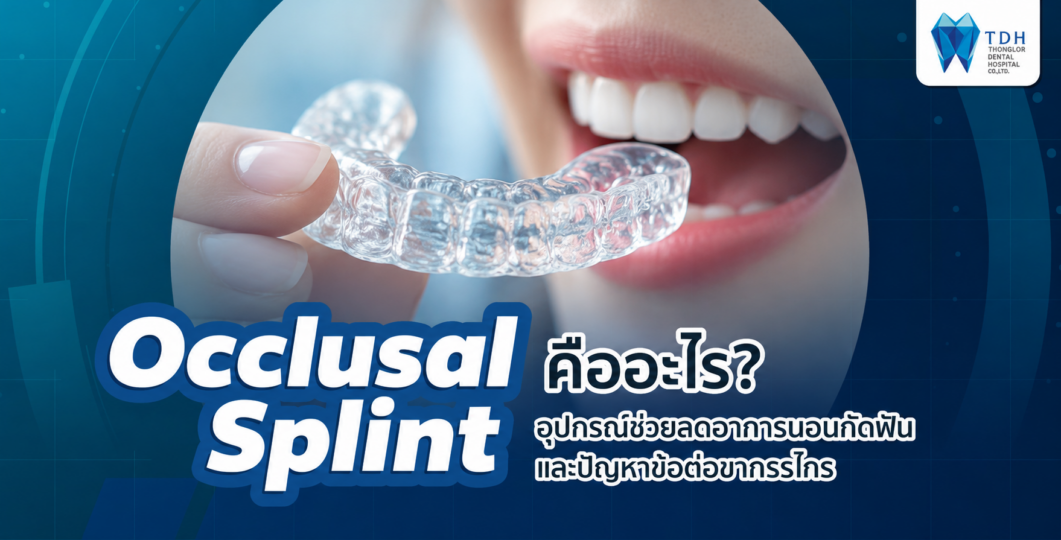
Waking Up With Jaw Pain, Headaches or Unexplained Tooth Wear?
If you have these symptoms, they may be signs of teeth grinding (Bruxism) or a temporomandibular joint disorder (TMJ Disorders), which are common among working-age adults and people under accumulated stress.
One treatment that dentists often recommend is the Occlusal Splint, which many people call a bite splint. It is a custom-made device designed to protect your teeth, reduce pressure on the jaw, and relieve symptoms caused by abnormal grinding or clenching.
What Is an Occlusal Splint?
An Occlusal Splint is a clear acrylic device made specifically for each patient. It fits over the upper or lower teeth to help control the bite and distribute chewing forces appropriately.
This device does not only prevent tooth wear. It also helps reduce the pressure placed on the chewing muscles and the jaw joints.
What Problems Can an Occlusal Splint Help With?
1. Teeth Grinding (Bruxism)
People who grind their teeth are usually unaware of it, but the force generated during sleep can be many times higher than when chewing food.
Possible effects include:
- Abnormal tooth wear
- Cracked or broken teeth
- Jaw pain
- Headaches after waking up
- Tight facial muscles
An Occlusal Splint helps reduce the impact of the biting force and prevents tooth wear.
2. Jaw Joint Pain (TMJ Disorders)
People with jaw joint problems may experience:
- Pain in front of the ear
- Clicking sounds when opening the mouth
- Limited mouth opening
- Jaw pain while chewing
An Occlusal Splint helps reduce pressure on the jaw joints and allows the muscles to relax more.
3. Chewing Muscle Pain
Prolonged clenching or tensing of the muscles may cause pain in the following areas:
- Temples
- Jaw
- Neck
- Shoulders
Wearing an Occlusal Splint can help reduce the overworking of these muscles.
Who Is Suitable for an Occlusal Splint?
You may be suitable for an Occlusal Splint if you have any of the following:
- Teeth grinding during sleep
- Abnormal tooth wear
- Teeth cracked from chewing forces
- Jaw pain after waking up
- Chronic headaches with no known cause
- Clicking sounds when opening the mouth
- Inflammation of the jaw joint
- Clenching or grinding teeth during the day
How Is an Occlusal Splint Different From a Retainer?
Many people mistakenly think an Occlusal Splint and a retainer are the same device.
In fact, they serve different purposes.
| Occlusal Splint | Retainer |
|---|---|
| Used to treat teeth grinding and jaw joint problems | Used to keep teeth in position after braces |
| Designed to distribute biting forces | Designed to prevent teeth from moving |
| Thicker, with a specialized design | Thinner in appearance |
| Used to treat clinical symptoms | Used to maintain orthodontic results |
How Long Do You Need to Wear an Occlusal Splint?
The duration of use depends on the cause and severity of your symptoms.
In general, your dentist may recommend wearing it:
- Only while sleeping
- During periods when symptoms are severe
- Continuously over the long term for people with chronic teeth grinding
Regular follow-up with your dentist helps adjust the treatment plan so it suits you best.
Caring for Your Occlusal Splint
To extend its lifespan, you should:
- Rinse with clean water after every use
- Clean gently with a brush
- Store it in a ventilated case
- Avoid hot water
- Bring it in for checks at your dentist’s appointments
Summary
The Occlusal Splint, or bite splint, is a dental device that helps prevent tooth wear, reduce teeth grinding, relieve chewing muscle pain, and treat jaw joint problems.
If you have jaw pain, headaches after waking up, abnormal tooth wear, or suspect that you grind your teeth, getting examined by a dentist will help identify the cause and choose the most suitable treatment.
At TDH Dental, our dental team is ready to thoroughly assess your bite and jaw joint problems and design a custom Occlusal Splint, helping you use your mouth comfortably and enjoy a better quality of life.
