
 ไทย
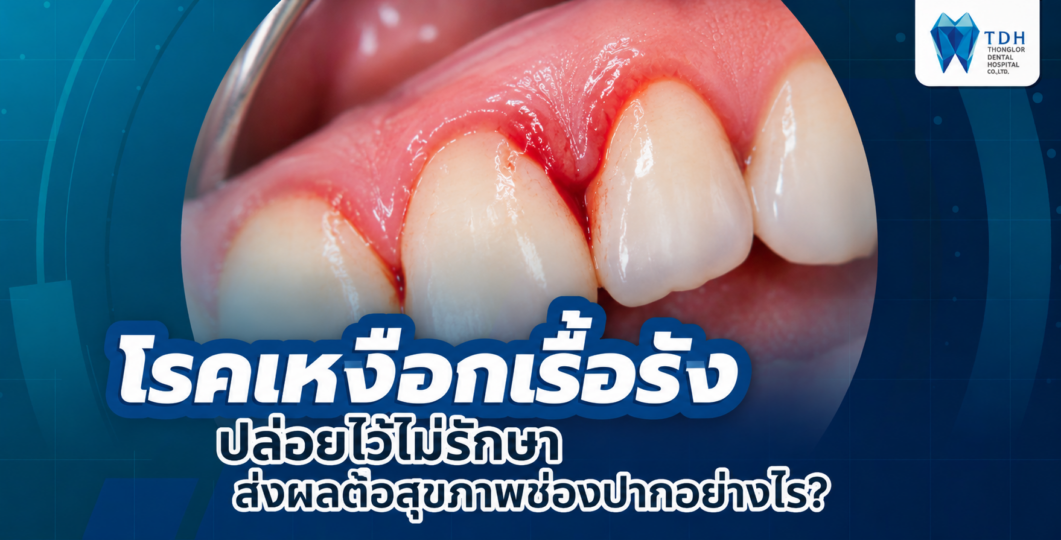
Chronic gum disease is an oral health problem many people overlook, because in the early stages there may be only swollen, red gums or bleeding when brushing. But if left untreated, the inflammation can spread to the tissues and bone that support the teeth, leading to gum recession and loose teeth, and possibly the loss of natural teeth.
What is chronic gum disease?
Gum disease is caused by a build-up of plaque and bacteria on the teeth and along the gum line. If cleaning is not thorough, plaque can harden into tartar and trigger inflammation.
Gum disease is divided into 2 main conditions:
-
Gingivitis: Swollen, red or easily bleeding gums, without loss of the bone supporting the teeth from periodontal disease. It can be reversed with appropriate treatment.
-
Periodontitis: Inflammation that affects the tissues and bone supporting the teeth, which may cause permanent damage and increase the risk of tooth loss.
5 effects of leaving chronic gum disease untreated
1. Gum recession and deep periodontal pockets
As inflammation spreads, the tissues around the teeth may be destroyed, causing the gums to recede and deep pockets to form between the gums and teeth. This makes plaque build up more easily, and teeth may become sensitive from exposed root surfaces.
2. Destruction of the bone supporting the teeth
Periodontitis can cause the bone that holds the tooth roots to be gradually lost. This damage cannot return to its original state on its own, although treatment can help control the inflammation and slow the progression of the disease.
3. Loose teeth and risk of tooth loss
As more of the tissue and bone supporting the teeth is destroyed, teeth may begin to loosen or shift from their original position. If the disease is severe and untreated, natural teeth may eventually be lost.
4. Chronic bad breath
The build-up of bacteria and inflammation of the gums can be one cause of chronic bad breath. Some people may also have an unusual taste in the mouth or pus around the gums.
5. Difficulty chewing and impact on quality of life
When teeth are loose or painful when chewing, you may avoid certain foods, which affects how easily you can eat and may impact nutrition and quality of life in the long term.
Warning signs of chronic gum disease you should not ignore
If you notice any of the following, you should see a dentist to assess your gum health.
-
Swollen, red or frequently bleeding gums
-
Chronic bad breath even though you brush regularly
-
Receding gums, making the teeth look longer
-
Loose teeth or increasing gaps between teeth
-
Pain when chewing or pus around the gums
Note that in some people, periodontal disease may cause no obvious pain even after loss of the bone supporting the teeth has begun.
Can chronic gum disease be treated?
Gum disease can be treated and controlled. The approach depends on the severity of the disease, for example:
-
Scaling: Helps remove tartar that has built up on the tooth surfaces and in accessible areas.
-
Root planing: Cleans the root surfaces below the gum line to reduce plaque and tartar.
-
Periodontal treatment: In people with significant loss of the tissue or bone supporting the teeth, additional treatment may be needed, including periodontal surgery in some cases.
-
Ongoing care: Monitoring gum health and having cleanings at intervals set by your dentist, to reduce the risk of the disease returning.
Periodontal treatment can help control the disease, but it cannot guarantee that all the lost tissue or bone will return.
How to prevent gum disease and care for your oral health
Preventing gum disease starts with consistent oral care, including:
-
Brush at least twice a day with a soft-bristled toothbrush
-
Use dental floss or interdental brushes every day
-
Avoid smoking, which is a major risk factor for periodontal disease
-
Manage medical conditions such as diabetes
-
Have dental check-ups and scaling as advised by your dentist
Chronic gum disease care at TDH Dental
Healthy gums are an important foundation for keeping natural teeth functioning well in the long term, especially for preventing loss of the bone supporting the teeth and loose teeth from periodontal disease.
At TDH Dental, you can consult our experienced dental team to assess the health of your gums and the tissues supporting your teeth, and plan periodontal treatment according to the severity and what suits each individual.
Caring for your gums starting today is part of preserving your natural teeth and maintaining good quality of life in the long term.
