

 ไทย
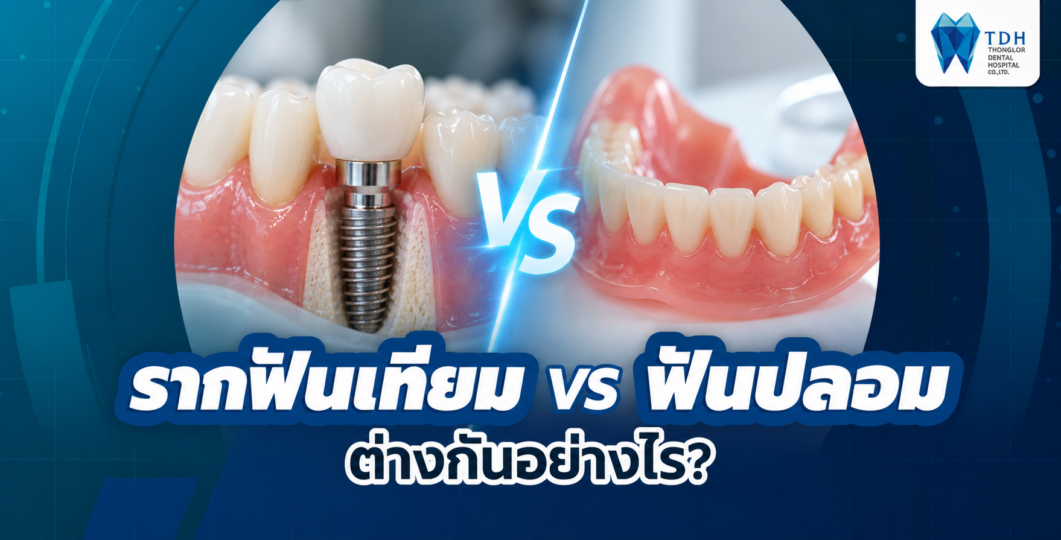
When you lose natural teeth, whether a single tooth or several, replacing the missing teeth is important for chewing, speaking and confidence in daily life. Dental implants and dentures are both popular options, but they differ in strength, comfort, cost and treatment process. So which should you choose for your oral health?
What is a dental implant?
A dental implant is a material designed to replace the natural tooth root. It is placed in the jawbone to support a crown, a bridge, or a denture that attaches to implants.
Benefits of dental implants include:
-
Stability for chewing and function similar to natural teeth
-
No need to grind down neighboring teeth to make a bridge when replacing a single tooth with a single implant
-
Helps slow the loss of jawbone in the area where the implant is placed
-
Can be cleaned and cared for in a way similar to natural teeth
However, dental implants require surgery and a waiting period for the bone to bond with the implant, and the amount of bone, gum health and any medical conditions must be assessed before treatment.
What are dentures?
Dentures are appliances used to replace lost natural teeth, helping to restore chewing, speech and the look of your smile.
Removable dentures are divided into 2 main types:
-
Partial dentures: Used to replace some missing teeth, relying on the oral tissues and possibly held in place by natural teeth.
-
Complete dentures: Used to replace all of the teeth in the upper or lower jaw.
The advantages of removable dentures are that the initial cost is generally lower than dental implants and no implant surgery is required. However, some people may feel unstable when chewing, and the dentures need to be removed for cleaning or adjusted as the gums and bone change.
Dental implants vs dentures: what is the difference?
| Topic | Dental implant | Removable denture |
|---|---|---|
| Attachment | Anchored to the jawbone | Supported by the gums or remaining teeth |
| Chewing | Generally more stable | May move while chewing |
| Convenience | A single-tooth crown does not need to be removed | Must be removed for cleaning |
| Treatment | Requires implant surgery | Generally no implant surgery |
| Treatment time | May take several months | Generally shorter |
| Initial cost | Higher | Generally lower |
| Long-term care | Check the implant and gum health | Check the fit and adjust the denture |
Both methods can replace lost teeth, but which is suitable depends on each person’s oral condition, needs and budget.
Dental implants or dentures: which is right for whom?
Who are dental implants suitable for?
-
People who have lost teeth and want a stable tooth replacement
-
People who want to avoid removable dentures
-
People with suitable jawbone and oral health, or whose mouth can be prepared before treatment
-
People who can keep their teeth clean and attend regular follow-up visits
Who are dentures suitable for?
-
People who have lost several teeth or all of their teeth
-
People who want an option with a lower initial cost
-
People who do not want, or have limitations on, having surgery
-
People who can remove, clean and care for dentures properly
There are also implant-supported dentures, another option for people who want a more stable denture, available in both removable and fixed forms depending on the treatment plan.
Should I replace a lost tooth right away?
When a tooth is lost, the jawbone in that area may gradually shrink, and in some cases neighboring teeth may shift position, affecting future tooth replacement planning.
You should therefore consult a dentist to assess your treatment options, without waiting until chewing problems occur or several teeth are lost. That said, not every gap left by a lost tooth needs to be replaced immediately.
Consult about dental implants and dentures at TDH Dental
There is no single method between dental implants and dentures that is right for everyone, because oral health, function and readiness for treatment must all be considered.
At TDH Dental, you can consult our experienced dental team to assess your teeth, gums and jawbone, and plan tooth replacement with dental implants or dentures as appropriate for each individual.
Having properly functioning teeth not only lets you smile with confidence but is also an important part of long-term health and quality of life.
