

 ไทย
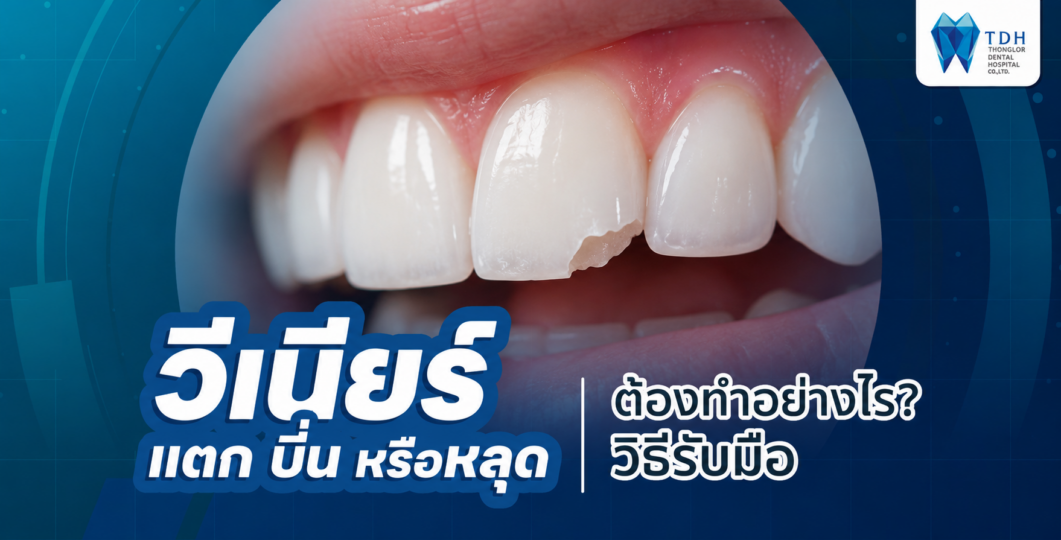
What to Do If a Veneer Cracks, Chips or Comes Off: How to Cope and Fix It
A cracked, chipped or detached veneer is a problem that can happen after getting veneers, whether from biting hard food, an accident or teeth grinding. Although veneers are designed to be strong and usable in daily life, damage can still occur. Knowing how to respond correctly helps reduce the risk to your natural tooth and lets your dentist plan an appropriate fix.
What Causes a Veneer to Crack, Chip or Come Off?
Veneers (Dental Veneers) are thin materials bonded to the front surface of the teeth to adjust the shape, colour and appearance of your smile. Causes that may damage a veneer include:
-
Biting or chewing hard food: such as ice, hard candy, or using your teeth to bite objects
-
Teeth grinding (Bruxism): grinding or clenching forces may increase the risk of the veneer cracking
-
Accidents or impact: such as a fall or a blow to the face
-
Deterioration of the bonding material: this can make the veneer loose or cause it to come off after long use
-
Problems with the natural tooth: such as decay at the edge of the veneer, which may affect the strength of the bond
What Should You Do If a Veneer Cracks, Chips or Comes Off?
If you find your veneer is damaged, act according to the type of problem as follows.
1. Slightly chipped veneer
If the veneer is only slightly chipped and there is no pain, avoid biting hard food with that tooth and make an appointment to see your dentist to check the damage.
In some cases the dentist may be able to smooth the chipped edge or repair it with tooth-coloured filling material, depending on the type of veneer and the location of the damage.
2. Cracked or fractured veneer
If the veneer has broken into pieces or has a crack, keep the pieces that came off in a clean container and avoid chewing on that tooth.
If a sharp edge irritates your tongue or cheek, you can temporarily cover it with orthodontic wax before seeing your dentist. Do not try to file or trim the veneer yourself.
3. Veneer comes off completely
If the veneer comes off in one piece, keep it and bring it to your dentist for assessment. You should:
-
Store the veneer in a clean box or container with a lid
-
Avoid hard, sticky, very hot or very cold food if the tooth is sensitive
-
Brush the area gently
-
Do not use super glue or any ordinary glue to stick the veneer back on yourself
-
Contact your dentist to arrange an examination and treatment as soon as possible
If the veneer is still intact and the natural tooth has no problems, the dentist may consider bonding it back on, but in some cases a new veneer may be needed.
Can a Cracked or Detached Veneer Be Repaired?
Repairing a veneer depends on the type of material and the extent of the damage. In general, the approaches are as follows.
| Type of damage | Possible solution |
|---|---|
| Slightly chipped veneer | Polishing or repair with resin material |
| Severely cracked veneer | Consider making a new veneer |
| Veneer comes off completely | Check whether it is suitable to bond back on |
| Natural tooth under the veneer is damaged | Treat the tooth before repairing or replacing the veneer |
Ceramic veneers and composite veneers have different properties and repair limitations, so you should have your dentist assess the damage before choosing a treatment approach.
When Should You See a Dentist Urgently for a Cracked or Detached Veneer?
If a veneer cracks or comes off without severe symptoms, contact the clinic to book an examination as soon as possible. However, if you have severe toothache, a broken natural tooth, bleeding that will not stop, or the damage was caused by a serious accident, you should be assessed urgently.
Leaving a damaged veneer in the mouth for a long time may increase the risk of irritation, tooth sensitivity or further damage.
How to Care for Veneers So They Last
To help reduce the risk of cracking, chipping or detachment, take proper care of your veneers as follows:
-
Avoid biting ice or hard objects
-
Do not use your teeth to open packaging or bite your nails
-
Brush and floss regularly
-
Have your teeth and veneers checked as your dentist advises
-
If you grind your teeth, consult your dentist about using a suitable protective appliance
Veneer Care and Repair at TDH Dental
When a veneer is damaged, an early examination helps determine whether it can be repaired, bonded back on, or needs to be replaced with a new one, and also checks the health of the natural tooth underneath.
At TDH Dental you can consult our experienced dental team to assess a cracked, chipped or detached veneer and plan care and treatment suited to each individual.
A beautiful smile should come with healthy teeth and proper long-term care.
