

 ไทย
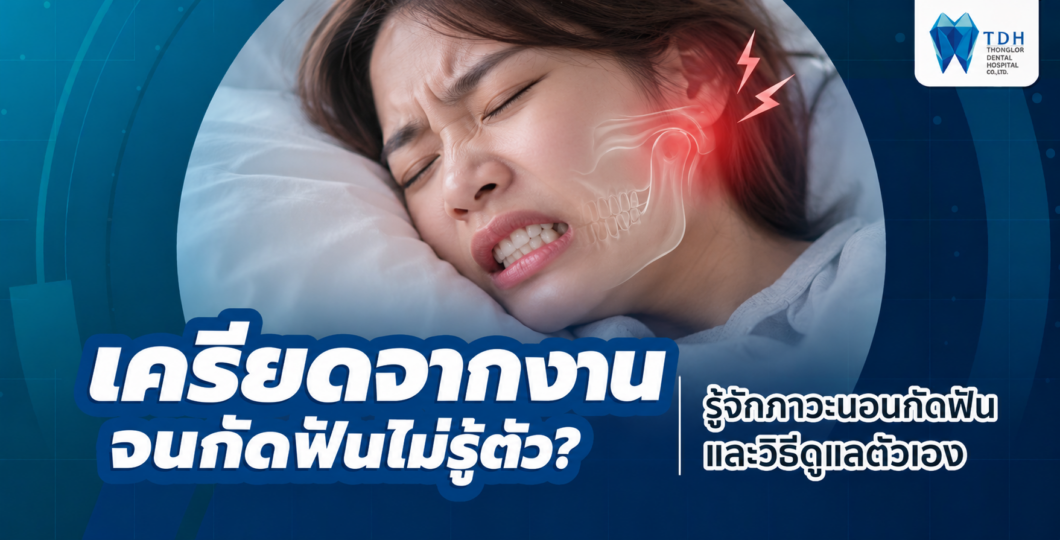
Have you ever noticed that when you are working hard or feeling stressed, you may unknowingly clench your teeth or tighten your jaw? Work stress may be related to teeth grinding and clenching (bruxism), which can occur both while awake and while asleep. If it happens often, it can cause jaw pain, temple pain, tooth wear or affect the quality of your sleep. Understanding the causes and knowing how to look after yourself helps reduce the risk of long-term oral health problems.
What is sleep bruxism?
Sleep bruxism is activity of the chewing muscles during sleep, which may involve biting, clenching or grinding the teeth without realising it. Teeth grinding behaviour can be divided into 2 types:
-
Awake Bruxism: Clenching the teeth or tensing the jaw while awake, often seen during work, concentration or stress.
-
Sleep Bruxism: Biting or grinding the teeth during sleep, which the person may not know is happening.
Grinding your teeth occasionally may not cause problems, but if it is severe or happens often, it can affect the teeth, the chewing muscles and your comfort in daily life.
Can work stress really cause teeth grinding during sleep?
Stress and anxiety are factors associated with teeth grinding, especially clenching while awake, such as during meetings, while working at a computer or when under pressure.
However, stress is not the only cause of sleep bruxism, as other factors may also be involved, such as:
-
Not getting enough sleep or having sleep problems
-
Drinking too much caffeine or alcohol
-
Smoking
-
Genetics and certain medications
-
Obstructive sleep apnea in some patients
It should therefore not be concluded that everyone who grinds their teeth in their sleep does so from stress alone.
5 warning signs that you may be clenching your teeth without realising
Symptoms that may occur with bruxism include:
-
Jaw pain after waking up or tired jaw muscles
-
Headaches at the temples, especially after waking up
-
Worn or chipped teeth from strong or repeated chewing force
-
Unusual tooth sensitivity, which may be related to wear of the tooth enamel
-
Tensing the jaw during work, especially when concentrating or under stress
However, these symptoms can also be caused by other health problems, so an examination by a dentist helps identify the cause and plan appropriate care.
Self-care tips to reduce stress-related teeth grinding
Adjusting your daily habits may help reduce factors associated with teeth grinding. The approaches are as follows:
1. Practise relaxing your jaw muscles
While working, notice whether you are clenching your teeth or tensing your jaw. In the natural resting position, the upper and lower teeth should be slightly apart and not pressed together all the time.
2. Manage stress during the day
Try taking regular breaks from the screen, practising slow breathing, exercising or doing relaxing activities to reduce accumulated tension.
3. Adjust your habits before bed
Go to bed and wake up at regular times, reduce caffeine in the evening and avoid drinking too much alcohol to support good sleep hygiene.
4. Avoid overusing your jaw
If you have jaw pain, avoid chewing gum or hard foods for long periods, and you may apply a warm compress to the jaw muscles to help relieve tightness.
5. Have your teeth checked and ask about an occlusal splint
If you grind your teeth often, your dentist may consider recommending an occlusal splint to help protect against tooth wear or damage. This device is not guaranteed to stop sleep bruxism completely.
When should you see a dentist about teeth grinding?
If you regularly have jaw pain or temple pain, worn or chipped teeth, tooth sensitivity, or someone close to you has noticed you grinding your teeth while asleep, you should have an examination.
If you snore loudly along with pauses in breathing during sleep, or feel very tired during the day, you should consult a doctor for further assessment of possible sleep disorders.
Care for teeth grinding and oral health with TDH Dental
Stress can affect teeth-grinding behaviour without our noticing. Caring for your oral health together with adjusting your habits and getting enough rest is therefore an important part of dental wellness.
At TDH Dental, you can have a consultation with our experienced dental team to assess signs of tooth wear, the chewing muscles and the jaw joint, and to consider care options such as an occlusal splint, as indicated for each individual.
Because good oral health is not limited to brushing your teeth, but also includes paying attention to small habits that happen during the day and while you sleep.
