
 ไทย
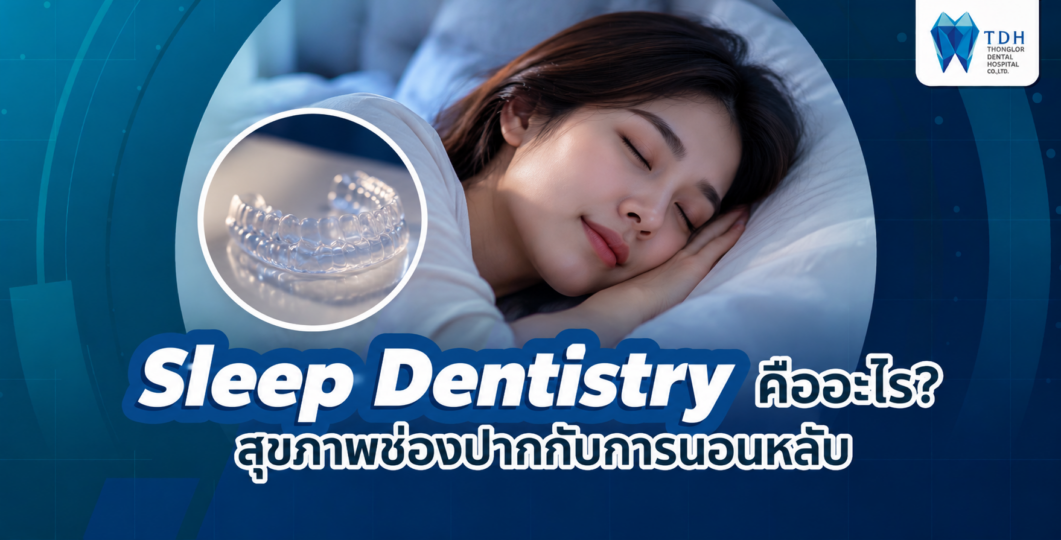
Many people may not realize that oral health and sleep are connected. Teeth grinding, snoring and sleep apnea can all affect your health and quality of life in the long term. Sleep Dentistry is an approach to care that links dentistry with sleep health, helping to assess and manage related problems appropriately.
What Is Sleep Dentistry?
Sleep Dentistry, or Dental Sleep Medicine, is dental care related to sleep disorders, especially problems connected with breathing during sleep and oral health, such as snoring, obstructive sleep apnea and teeth grinding.
Dentists play a role in examining abnormalities of the teeth, jaw and oral structures, and in considering oral appliances for some patients, working together with sleep physicians when necessary.
Note that Sleep Dentistry does not mean having dental work done while asleep or under general anesthesia, which is a different approach to treatment.
How Is Oral Health Related to Sleep?
Some oral health problems can occur during sleep or are related to sleep disorders, such as:
1. Teeth Grinding (Sleep Bruxism)
Sleep bruxism is a condition in which the chewing muscles are active during sleep. It may cause tooth wear, jaw pain, headaches after waking up, or a feeling of fatigue in the jaw.
Related factors may include stress, genetics, certain medications and lifestyle habits. Your dentist may consider an Occlusal Splint to help protect your teeth from damage, as appropriate.
2. Snoring and Sleep Apnea (Obstructive Sleep Apnea)
Snoring may be caused by vibration of tissues in the airway. However, loud snoring together with pauses in breathing, waking up with a start, or daytime fatigue may be a sign of obstructive sleep apnea (OSA).
Dentists can help screen for risk and assess the oral structures before referring you to a physician for diagnosis. Some patients may be considered for an oral appliance that helps position the lower jaw during sleep.
3. Dry Mouth During Sleep
Breathing through the mouth during sleep may cause dry mouth, which affects oral comfort and may increase the risk of cavities when saliva is continuously reduced.
If you often have a dry mouth, you should get checked to assess the cause, which may be related to breathing, medications or other health conditions.
Signs You Should Have Your Oral Health and Sleep Checked
If you regularly experience any of the following, you should consult a dentist or physician for further assessment.
-
Frequently waking up with jaw pain or headaches
-
Worn or cracked teeth, or unexplained tooth sensitivity
-
Loud snoring, or someone noticing that you stop breathing during sleep
-
Not feeling refreshed after sleep, and feeling sleepy or tired during the day
-
Dry mouth, or frequently waking up to drink water
These symptoms do not mean everyone has a sleep disorder, but they are signs that should not be ignored, especially if you stop breathing during sleep.
How Can Dentistry Help With Sleep Problems?
The approach to care depends on each individual’s cause and may include:
-
Examination of the teeth and jaw to assess signs of grinding and abnormalities of the chewing muscles.
-
Use of an Occlusal Splint to help prevent tooth wear and reduce the effects of teeth grinding in suitable patients.
-
Use of a jaw-positioning device (Mandibular Advancement Device) for some patients who have been diagnosed with sleep apnea and have an indication for treatment.
-
Collaborative care with a sleep physician to ensure appropriate diagnosis and treatment.
Note that devices that protect teeth from grinding and devices that treat sleep apnea have different purposes and should not be used in place of one another without advice from a medical professional.
Caring for Your Oral Health for Better Sleep Quality With TDH Dental
Oral health is another component that deserves attention as part of holistic health care, especially for people who grind their teeth, have jaw pain, or notice dental problems that may be related to behaviors during sleep.
At TDH Dental, you can receive a consultation and an assessment of your teeth, bite and jaw with our experienced dental team, who will plan appropriate care for your oral problems and consider a referral if a sleep disorder is suspected.
Because good health care does not end with a smile, but also includes quality of life at every moment of the day.
