
 ไทย
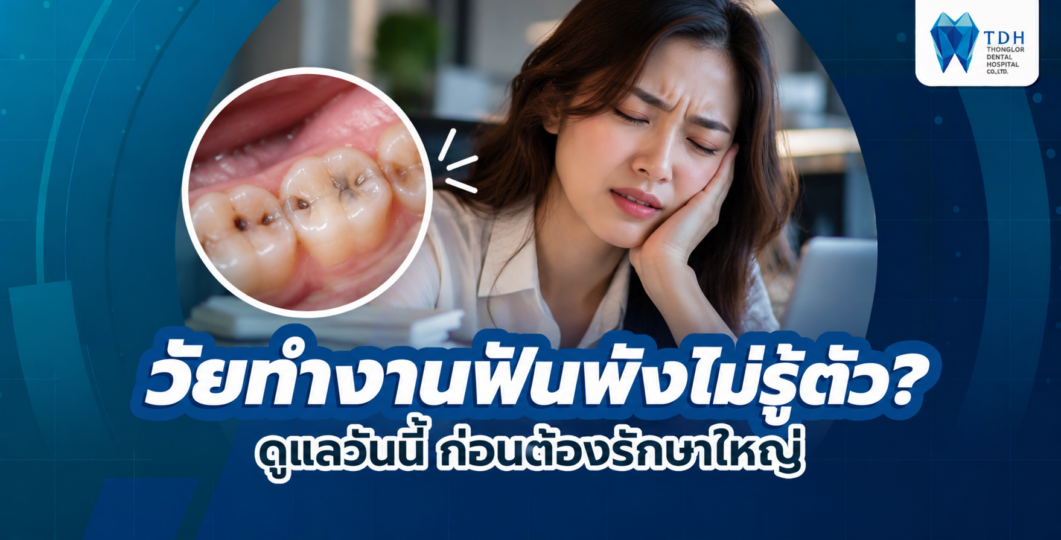
Working life is full of hurry: waking early for work, back-to-back meetings all day, coffee to stay alert, and then overtime and too little rest. It is easy to forget about your own oral health.
Many people think that if they have no toothache, their teeth must be healthy. In reality, many oral health problems, such as cavities, gum disease and tooth wear, can begin without any obvious symptoms.
Small habits repeated every day, such as sipping sweet coffee all morning, snacking at work, forgetting to floss, or clenching your teeth when stressed, can all increase the long-term risk of oral health problems.
When these problems are left to progress, what could have started as simple care and prevention may turn into fillings, root canal treatment, or other more complex treatment.
Data from the Centers for Disease Control and Prevention (CDC) indicates that about 21% of American adults aged 20–64 have at least one untreated cavity. This shows that tooth decay is a problem in adulthood, not only in children or older people. Please note that this figure comes from the United States and is not a rate for the Thai population.
So which habits should working adults watch out for? Which warning signs should not be ignored? And how can you start caring for your teeth in a way that suits a busy life?
Why are working adults at risk of oral health problems?
Dental problems in working adults are not caused by increasing age alone. They result from several factors related to behavior, general health and daily oral care.
Some working adults have limited time to look after themselves, eat at irregular times, or carry accumulated stress, which can affect the teeth and gums both directly and indirectly.
For example, frequently eating or drinking sugary foods and drinks exposes the teeth repeatedly to acid produced by bacteria, while clenching the teeth can increase the force placed on the teeth and jaw muscles.
In addition, certain medical conditions, some medications and dry mouth (low saliva) can also increase the risk of cavities and other oral health problems.
Importantly, these problems do not happen to every working person, and the risk can be reduced by adjusting habits together with appropriate dental check-ups.
7 habits of working adults that may harm teeth without you realizing
1. Sipping sweet coffee or other drinks all day
For many people, coffee is an essential morning drink. But what matters is not only how many cups you drink, but also how much sugar they contain and how often you sip.
When you often drink coffee with sugar, sweetened condensed milk or syrup, bacteria in dental plaque can use these sugars to produce acids that cause the tooth enamel to lose minerals.
Sipping sweet drinks over a long period can therefore increase how often the teeth are exposed to acid, compared with drinking them over a short time.
Black coffee without sugar does not carry the same sugar-related cavity risk as sweet coffee, but it may cause staining on the teeth, and caffeine may make dry mouth more noticeable in some people.
2. Snacking often while working
Snacking while working or in meetings is common, especially sweets, candy and foods high in sugar.
When sugary foods are eaten often, bacteria in the mouth have repeated opportunities to produce acid, which increases the risk of cavities.
Cutting down how often you have sweet snacks and choosing plain water during the day is one way to help reduce risk factors.
3. Accumulated stress leading to teeth clenching or grinding
Work stress may be associated with clenching or grinding the teeth (bruxism), which can happen both while awake and during sleep.
People who do this may not realize they are biting down hard, especially when concentrating on work or when resting.
Severe or frequent grinding may lead to worn, chipped or cracked teeth, or aching jaw muscles.
However, teeth grinding has many causes and is not caused by stress alone, and not everyone who grinds their teeth needs treatment.
4. Brushing in a rush before bed, or skipping brushing
After a long day of work, some people feel so tired that they brush very quickly or fall asleep without brushing.
When plaque builds up on the tooth surfaces and along the gum line, it can increase the risk of cavities and gum inflammation.
Those who eat or drink sweet things before bed in particular should clean their teeth properly, because brushing before bed is one of the key habits for preventing cavities.
5. Neglecting to floss
Brushing alone may not remove plaque between the teeth thoroughly.
If plaque is left to build up in these areas for a long time, it can increase the chance of cavities between teeth and gum inflammation.
Using dental floss or a suitable interdental cleaning tool is therefore part of daily oral health care.
6. Drinking too little water or having a dry mouth
Saliva helps wash away food debris, dilute acids and support the remineralization of tooth enamel.
People with low saliva may have a higher risk of cavities and oral infections. The cause may be related to medications, medical conditions, dehydration or other factors.
If your mouth always feels dry, you have difficulty swallowing dry food, or you need to sip water unusually often, you should consult a dentist to evaluate the cause.
7. Skipping dental check-ups because “no symptoms means no problem”
One habit that leads to dental problems being found late is waiting until there is pain before seeing a dentist.
But early cavities and some stages of periodontal disease may have no obvious pain, so patients may not notice the changes.
Regular dental check-ups allow the dentist to assess the health of your teeth and gums and look for abnormalities you may not be able to see yourself.
5 oral health problems working adults should watch out for
1. Tooth decay (Dental Caries)
It may begin with mineral loss from the tooth enamel without any symptoms, before progressing into a cavity and causing sensitivity or toothache.
2. Gingivitis and periodontal disease
Symptoms may include swollen gums, bleeding when brushing, or chronic bad breath. If it progresses to periodontal disease, it may affect the bone that supports the teeth.
3. Tooth wear and tooth erosion
It may result from grinding the teeth, brushing too hard, or frequent exposure to acid from foods and drinks, leading to sensitive teeth or increasing loss of tooth structure.
4. Jaw muscle and joint pain
It may be associated with teeth clenching, teeth grinding during sleep, or disorders of the chewing system, and may cause jaw pain or tired muscles after waking up.
4. Jaw muscle and joint pain
It may be associated with teeth clenching, teeth grinding during sleep, or disorders of the chewing system, and may cause jaw pain or tired muscles after waking up.
5. Cracked teeth or damaged fillings
Teeth that have been filled or restored can be damaged by several factors, such as chewing forces or biting hard objects. Some people start to feel pain only when chewing food.
These problems can occur together, especially when there are multiple risk factors, so a condition should not be diagnosed from symptoms alone.
Why might early detection help reduce complex treatment?
Having an oral health check-up before problems become severe makes it possible to choose care that suits the stage of the condition.
For example, an early cavity that has not yet formed a hole may be managed with fluoride and control of risk factors, while a cavity that has progressed to destroy tooth structure or the dental pulp may require restoration or root canal treatment.
|
Problem |
If found early |
If left to progress |
|---|---|---|
|
Tooth decay |
Fluoride, monitoring, or a filling as indicated |
May require root canal treatment, a crown, or tooth extraction |
|
Gingivitis |
Adjusting cleaning methods and removing tartar |
If it becomes periodontal disease, additional treatment of the tissues supporting the teeth may be needed |
|
Tooth wear |
Controlling the cause and monitoring the wear |
Teeth that have lost a lot of structure may need restoration |
|
Teeth grinding |
Assessing habits and risk |
In severe cases, teeth may fracture or be damaged enough to need restoration |
|
Cracked tooth |
Assessing the extent and finding ways to prevent further damage |
In some cases, a crack may progress until the tooth cannot be saved |
Not every problem progresses in the same order, and early detection does not guarantee that major treatment can be avoided in every case. However, it increases the chance of managing risk factors and choosing a suitable treatment approach before more damage occurs.
7 ways working adults can care for their teeth, even with a busy life
Caring for your teeth does not take much time, but consistency and the right method matter.
-
Brush at least twice a day with fluoride toothpaste, for about 2 minutes each time, especially before bed.
-
Use dental floss or an interdental cleaning tool every day to help remove plaque from areas that a toothbrush cannot easily reach.
-
Reduce sipping sweet coffee and sugary drinks throughout the day, and try to limit them to set times instead of sipping continuously.
-
Drink enough plain water and watch for dry mouth. If low saliva continues, you should be evaluated.
-
Notice whether you clench your teeth while working. When you are not speaking or eating, relax your jaw muscles and do not keep your teeth pressed together.
-
Do not let tooth sensitivity or toothache keep recurring without being examined, because it may be a sign of a problem that needs treatment.
-
Schedule regular oral check-ups. The frequency should be based on each person’s risk. Some people may be checked every 6 months, while others may need more or less frequent visits as advised by their dentist.
Daily oral care, together with appropriate check-ups, is an important way to help reduce the risk of cavities and gum disease.
Frequently asked questions about dental health for working adults (FAQ)
Plan your dental check-up appointment in advance and make it part of your annual health care. If you have any abnormal symptoms, such as toothache, swollen gums or bleeding gums, book an appointment without waiting for your regular check-up date.
Drinking coffee does not automatically cause cavities, but coffee with sugar or syrup, especially when sipped often throughout the day, may increase the risk of cavities. Black coffee without sugar may cause staining on the teeth.
Stress is one of the factors associated with teeth clenching or grinding, which, if severe or frequent, may cause the teeth to wear or break. But this does not mean everyone who is stressed will grind their teeth.
Yes, check-ups are needed according to your level of risk, because some stages of cavities and gum disease may have no pain. An oral health check-up helps find problems that you cannot notice yourself.
The frequency depends on the amount of tartar, gum health and the risk of periodontal disease. It is not necessarily the same interval for everyone, and your dentist will assess and recommend a suitable interval.
Not everyone does. For people at risk of tooth wear or fractures, a dentist may consider an occlusal splint to help protect the teeth, but this device does not make the grinding habit go away in every case.
Finding problems early may reduce the need for complex and costly treatment in some cases. However, the actual cost depends on the problem found and each person’s treatment plan.
Working adults, don’t wait for toothache. Start caring for your oral health today at TDH Dental
When daily life is full of work and responsibilities, oral health can become something that is put off without you realizing it.
But many dental problems do not always begin with severe pain. Sometimes they start with a small cavity, gum inflammation, or repeated teeth grinding that affects the tooth structure over the long term.
Adjusting daily habits together with regular dental check-ups is an important part of preventive health care, and may help reduce the chance of problems that need complex treatment in the future.
Working adults who would like an oral health check-up, or who are concerned about cavities, tooth wear, gum inflammation and jaw pain, can come for an examination and consultation with the experienced dental team at TDH Dental, to assess oral health and plan care suited to each individual.
Good health care should not wait for the body to send warning signs, and a healthy smile in the future can start with caring for your teeth today.
Medical references
-
Centers for Disease Control and Prevention (CDC) — Oral Health Tips for Adults Guidelines for caring for teeth and gums in adulthood
-
CDC — About Cavities Information on cavities in adults, prevention and early treatment
-
National Institute of Dental and Craniofacial Research (NIDCR) — Periodontal Disease Signs of gum disease and its effects on the tissues supporting the teeth
-
NIDCR — Bruxism Teeth grinding, stress and effects on dental health
-
American Dental Association (ADA) — Xerostomia Effects of low saliva on cavities and oral health
-
ADA — Nutrition and Oral Health The relationship between food, acidic drinks and oral health
