 ไทย
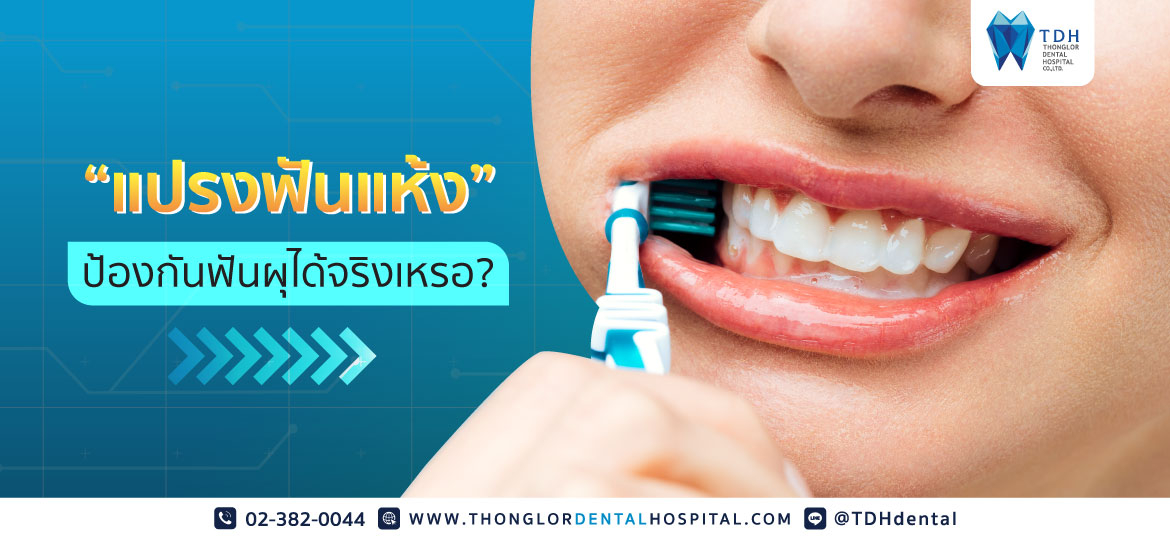
“Dry brushing” (brushing without rinsing) is something many people have heard a lot about lately. This way of caring for your mouth and teeth has been around for a long time but was never very popular. Recently, however, more oral-care products designed for this style of brushing have come onto the market, so we now see them everywhere. That has left many people wondering whether brushing this way really cleans the teeth, how it is done, and whether people with metal braces can use it too. Today we will walk you through all the answers so you can clear up your doubts and learn the correct way to brush like this.
What is dry brushing?
Before looking at the steps and benefits of dry brushing, let us first understand what it is, why people brush this way, and, most importantly, whether it can prevent tooth decay. To begin with, the ordinary way most of us brush uses water throughout: dipping the toothbrush in water before brushing, and rinsing the mouth with water before and after brushing. Because water is part of almost every step, this is called wet brushing.
“Dry brushing” is the opposite of wet brushing, because no water is used at all from start to finish. All you need is toothpaste and a toothbrush to complete the whole process. This cuts out the use of water, which is very convenient, and it suits everyone, including people undergoing orthodontic treatment of any kind, whether metal braces, clear aligners or any other type. It can be used to look after oral health and to help prevent tooth decay just like ordinary brushing. Most importantly, this method also lets the tooth surface take up fluoride better than brushing that involves water.
How to brush, and the benefits of dry brushing
Brushing without water has several advantages over brushing with water. The steps are as follows:
- Squeeze toothpaste onto the toothbrush.
- Start brushing right away, without wetting the brush or rinsing your mouth first.
- Brush for about 2 minutes, covering the whole mouth. When you finish, do not rinse with water. That is all there is to it.
Just 3 simple steps with no water, and you are done. Compared with normal brushing, the technique is no different; the only difference is that no water is used, which makes it more convenient. Most importantly, because the toothpaste stays on the tooth surface after brushing, rather than being rinsed away, the teeth are effectively coated with fluoride. This helps prevent tooth decay and makes your brushing work even better for your oral health.
Can people with braces dry brush?
People with braces can brush this way too, whatever type of braces they have, and it can even improve their oral care. So people with braces can use this method to look after their mouth and teeth and make their care more effective. However, they may find that the taste of the toothpaste lingers around the metal braces, so they may need to spit out saliva after brushing more often than people without braces. That is the only difference.
People with braces of any type can dry brush, but they may need to take extra care of their oral health compared with people without braces. If you would like more accurate, in-depth information, or want a dentist to examine your mouth and teeth in detail, you can contact TDH Dental, a full-service dental clinic with expert dentists who can advise you and recommend the correct way to brush to get the most out of your oral care.
