
 ไทย
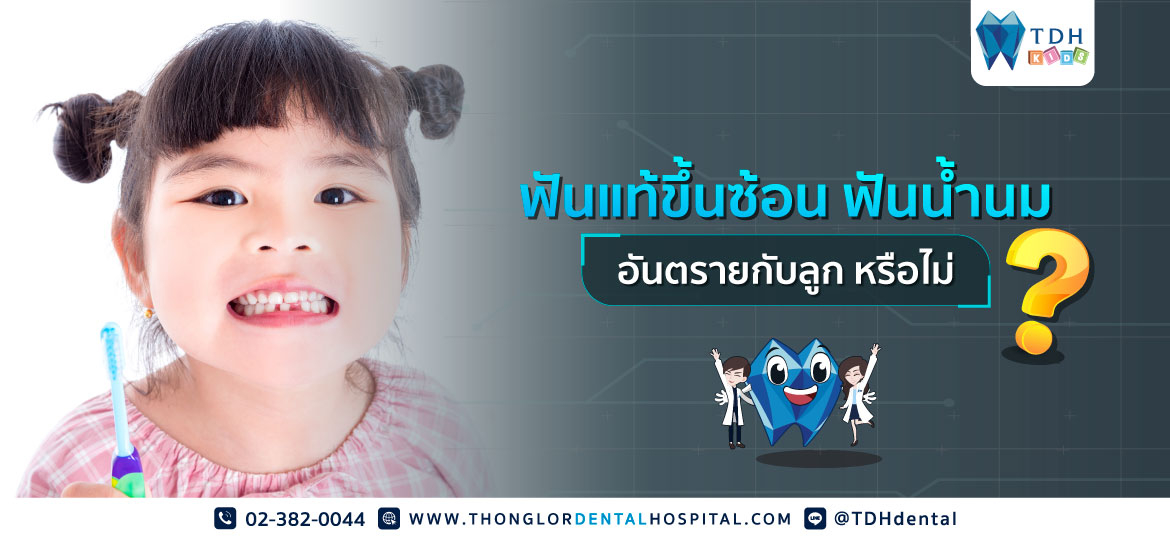
A permanent tooth growing in behind a baby tooth is common at the lower front teeth. The permanent lower front tooth sits behind the baby tooth, so it erupts behind it. If a permanent lower front tooth comes in behind a baby tooth but your child has no tooth pain and can brush, it is not considered dangerous. But if your child has tooth pain, is afraid to wiggle or brush the tooth, or the gums start to look red and inflamed, the dentist will advise taking your child for pediatric dental treatment or having the baby tooth removed.
What are baby teeth?
The first set of teeth begins to come in at around 6 months of age, and all 20 teeth are in by the time your child is 2 to 2.5 years old. Baby teeth help with chewing food, as well as speech development and pronunciation.
How long do baby teeth last?
Each baby tooth lasts for a different length of time. Baby teeth start to wiggle and fall out naturally on their own.
- At around 6-7 years old, the front baby teeth start to wiggle and fall out.
- At around 10-12 years old, the baby molars start to wiggle and fall out.
Are wobbly baby teeth dangerous?
A wobbly baby tooth is nothing to worry about. It is a natural process that happens when the permanent teeth begin to come in and dissolve the roots of the baby teeth. Each baby tooth starts to wiggle and fall out on its own when a child is about 6-12 years old, so a wobbly baby tooth is not dangerous at all. However, if there is bleeding, swollen gums, or a permanent tooth coming in behind a baby tooth, you should see a pediatric dentist for examination and further treatment.
What should you do when it is time but a baby tooth will not fall out?
Baby teeth are a child’s first set of teeth and are important for growth and for the eruption of the permanent teeth. Normally, each baby tooth starts to fall out at around 6-12 years of age, and a permanent tooth comes in to replace it. Sometimes, though, a baby tooth does not fall out when it should, and the permanent tooth comes in behind or alongside it, which may affect how the teeth line up in the future.
If this happens, you should take your child to a pediatric dentist to check the condition of the baby and permanent teeth and to decide whether the baby tooth should be removed. Removing the baby tooth makes room for the permanent tooth to come in and move into the correct position on its own. If the baby tooth is not removed, the permanent tooth may come in in an abnormal position, and braces may be needed in the future.
Causes of crowded teeth
Crowded teeth in children have several causes, but most involve not having enough room in the mouth for the new permanent teeth. This may be caused by heredity, thumb sucking, overuse of baby bottles premature loss of baby teeth, or an injury that leaves the jaws unbalanced. Crowded teeth in children can make teeth hard to clean and can lead to gum disease, tooth decay and loss of confidence when smiling. Correcting crowded teeth in children may require braces, removal of baby teeth or tooth reshaping, depending on how severe the crowding is and on the dentist’s advice.
What should you do after a baby tooth is removed?
After a baby tooth is removed, it is important to follow these steps for proper care:
- Apply gentle pressure: After the extraction, have your child bite on clean gauze or a damp tea bag to help control bleeding.
- Manage pain: If your child feels uncomfortable, you can give an over-the-counter pain reliever suitable for their age, as advised by a pediatrician.
- Give soft foods: Offer soft foods such as congee, mashed potato, soup, yogurt or smoothies for the first 2-3 days after the extraction. Avoid hard or crunchy foods that could irritate the extraction site.
- Rest: Make sure your child gets enough rest and avoids strenuous activity for the first day or two.
- Maintain oral hygiene: Continue brushing your child’s teeth as usual, taking care around the extraction site. Avoid vigorous rinsing so the blood clot that forms in the socket does not come loose.
- Contact the dentist if needed: If you notice excessive bleeding, severe pain or signs of infection, or if you have any concerns, please contact your child’s dentist for advice.
Plan your child’s beautiful smile with Invisalign clear aligners
Children normally get their first permanent tooth at around 6-7 years old. Once permanent teeth come in, parents need to pay attention and plan their child’s dental care, whether that is cleaning the teeth correctly twice a day, morning and evening, or using fluoride toothpaste to reduce the chance of tooth decay. This also includesInvisalign clear aligners to help modify the growth pattern of the jaw correct an abnormal bite, reduce the risk of the front teeth being knocked in cases of protruding teeth, help the permanent teeth come in in the correct position, and bring the teeth, lips and facial profile into better proportion.
If a permanent tooth comes in behind a baby tooth, parents do not need to worry. You can consult with TDH Dental. We have experienced pediatric dentists and a professional team ready to take good care of you. We come with complete, modern equipment and technology.
Thonglor Dental Hospital is a dental clinic certified to the ISO 9001:2015 standard. It provides every area of dentistry, has been open in more than 70 countries worldwide, and is trusted by many leading actors and celebrities.
Our treatments are wide-ranging, including specialist dentistry, veneers, root canal treatment, pediatric dentistry, children’s dental care, general dentistry, periodontics, prosthodontics, cosmetic dentistry, occlusal (bite) dentistry, restorative dentistry, oral surgery, Invisalign clear aligners, dental implants, dentures and more.
We currently have 7 branches: Thonglor, Punnawithi, Ratchaphruek, ICONSIAM, Prince Hospital Suvarnabhumi, Canvas Ploenchit and Vientiane, ready to take care of every patient.
You can visit the dentist for a consultation before treatment at the branch nearest you every day, or view our work, patient reviews from actors and celebrities who use our dental services, and many more useful dental articles.
