 ไทย
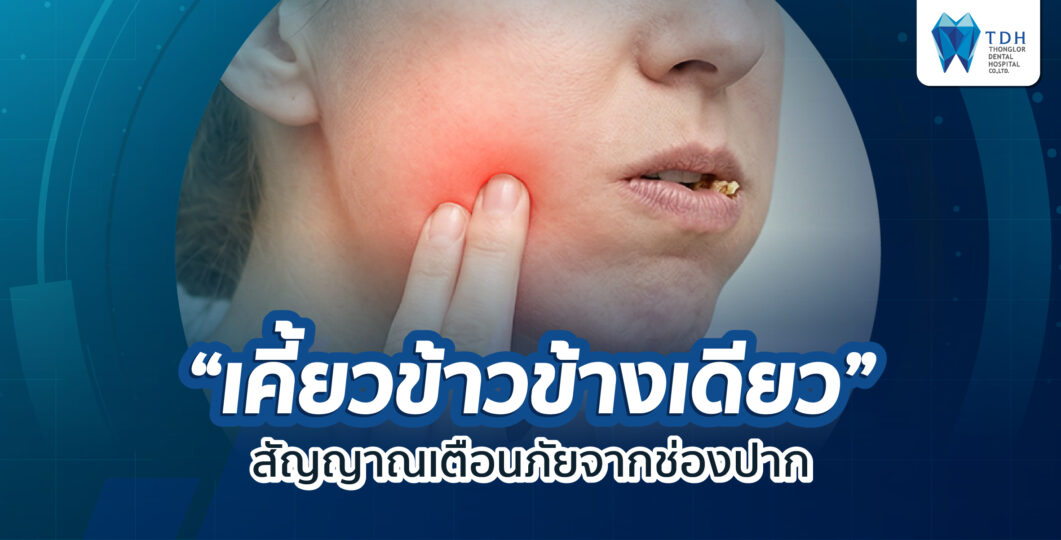
Do you chew on only one side?
Many people do not realise that they regularly chew on only one side of the mouth, assuming it is just a habit. In reality, chewing on one side can be a warning sign of a hidden oral health problem, and if left for a long time it can affect the teeth, gums, jaw and face.
If you notice that you regularly chew on only the left or the right side, it may be time to see a dentist for an examination.
Why do people chew on one side?
Chewing on one side usually does not happen without a reason. It is caused by discomfort or an abnormality inside the mouth, such as:
Tooth decay or sensitive teeth
When there is pain or sensitivity in a tooth, the body automatically avoids using that side and chews on the other side instead.
Broken or cracked teeth
A cracked or broken tooth can hurt when you chew, so you end up avoiding using it.
Missing teeth or tooth loss
Losing teeth can make chewing unbalanced and lead to using the other side more than normal.
Bite problems
When the upper and lower teeth do not fit together properly, it may be comfortable to chew on only one side.
Jaw joint problems (TMJ)
Pain or noises at the jaw joint can be another reason a patient chooses to use only one side of the jaw.
Long-term effects of chewing on one side
Although it may seem minor, chewing on one side for a long time can have several negative effects.
1. Uneven tooth wear
The teeth on the side you use regularly bear more chewing force than normal, so they wear down faster than the teeth on the other side.
Over time, this can change the level of your bite and lead to further chewing problems.
2. Unbalanced facial muscles
Continuously using the chewing muscles on only one side can cause the jaw muscles on the two sides to work unevenly.
In some people you may notice:
- The two sides of the face are uneven
- One side of the jaw looks larger than the other
- The shape of the face changes over time
3. Risk of jaw joint problems
Bearing unbalanced force for a long time can put extra strain on the jaw joint (TMJ).
This can lead to symptoms such as:
- Jaw pain
- Difficulty opening the mouth
- Clicking sounds in the jaw
- Headaches or pain around the temples
4. Increased risk of gum disease and tooth decay
The side that is not used enough for chewing may accumulate more plaque and food debris.
This is because chewing stimulates saliva flow, which plays an important role in naturally cleaning the mouth.
5. Reduced chewing efficiency
Chewing evenly on both sides makes the grinding of food more efficient.
If you chew on only one side, food may not be broken down thoroughly, which can affect digestion in the long term.
How can you tell if you chew on one side?
Common signs include:
- Chewing on the same side every time without realising it
- Feeling uncomfortable when chewing on the other side
- Some teeth are sensitive or painful when chewing
- Jaw fatigue or pain on one side
- Uneven tooth wear
- A face that looks asymmetrical
If you notice these symptoms, you should see a dentist to find the true cause.
How to fix one-sided chewing
Treatment depends on the cause of the problem, for example:
If it is caused by tooth decay
You may need a filling or root canal treatment.
If it is caused by a broken or cracked tooth
The tooth may need to be restored with a dental crown or another suitable approach.
If it is caused by tooth loss
A dental implant or denture may be considered to restore chewing.
If it is caused by a bite problem
Your dentist may recommend braces or bite adjustment so that chewing is more balanced.
Summary
Chewing on one side is not always just a habit. It can be a warning sign of a hidden oral health problem, whether tooth decay, a broken tooth, tooth loss or a bite problem.
If left for a long time, it can lead to tooth wear, jaw joint disorders, unbalanced facial muscles and reduced chewing efficiency.
Regular dental check-ups help find the cause and fix problems at an early stage, so that you can return to chewing in a balanced way and enjoy good oral health in the long term.
If you chew on one side, have jaw pain, or suspect a bite problem, you can come for an examination with the dental team at TDH Dental to receive advice and a treatment plan suited to you as an individual.
