

 ไทย
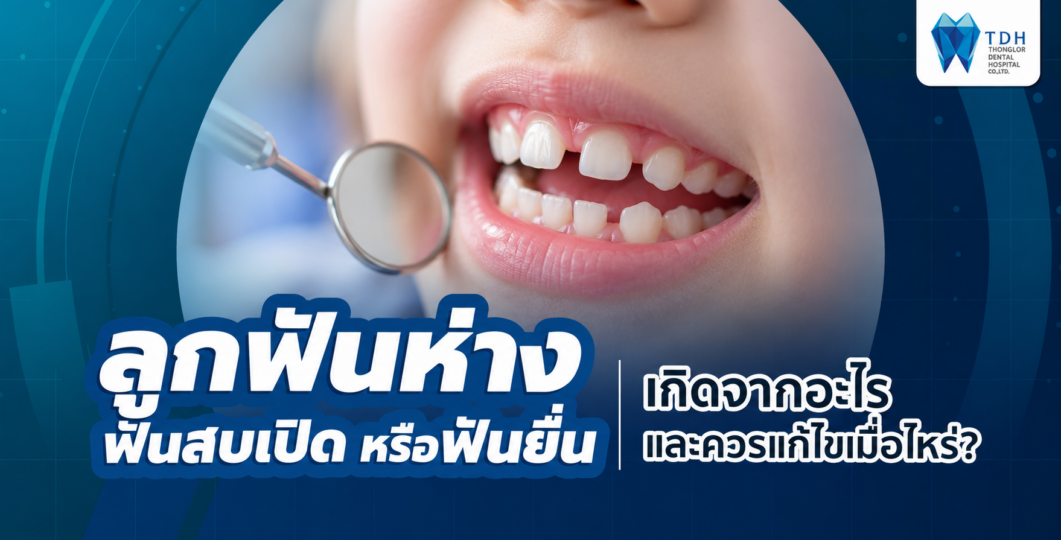
Gaps between a child’s teeth, an open bite or protruding teeth are patterns of tooth alignment and bite that are seen in children. They may be caused by the natural development of the teeth, childhood habits or the structure of the jaws. Some cases change as the child grows, but some problems should be assessed early to help the teeth and jaws develop appropriately.
What Is the Difference Between Gapped Teeth, Open Bite and Protruding Teeth in Children?
1. Gapped teeth in children (Diastema)
Gapped teeth means there are spaces between the teeth, especially the upper front teeth, and is seen while children are changing from baby teeth to permanent teeth. Common causes include:
-
Jaw growth and the eruption of permanent teeth
-
Teeth that are small relative to the space in the jaw
-
An abnormal number of teeth or abnormal tissue attaching the lip to the gum
In some cases, gaps may reduce on their own once the permanent teeth have fully erupted, but if the gap is large or does not reduce with age, a dentist should assess it further.
2. Open bite (Open Bite)
An open bite is a condition in which some upper and lower teeth do not touch when biting down, leaving a gap, especially at the front teeth, which may affect biting food and pronunciation.
Factors that may be involved include:
-
Prolonged thumb sucking or pacifier use
-
Tongue position or tongue-thrusting habits
-
The growth pattern of the jawbones
-
Nasal breathing problems that may be related to the pattern of facial growth
3. Protruding teeth (Protruding Teeth)
Protruding teeth is when the front teeth, especially the upper ones, stick out further forward than normal. It may prevent a child from closing their lips fully, or increase the risk of injury to the front teeth in an accident.
Causes may include genetics, the relationship between the upper and lower jaws, and thumb-sucking habits that continue for a long time.
When Should Gapped Teeth, Open Bite or Protruding Teeth Be Corrected?
In general, children should have their first orthodontic assessment by age 7, as recommended by the American Association of Orthodontists (AAO), because this is when permanent teeth begin to appear alongside baby teeth, allowing the dentist to assess tooth alignment and jaw growth.
However, if your child has very protruding teeth, teeth that do not meet properly, difficulty chewing, or habits that may affect the bite, they should be examined without waiting until age 7.
An early check does not mean every child must start braces right away. Some children may only need their development monitored, while others may benefit from treatment at an early stage.
How to Care for and Correct Bite Problems in Children
The approach depends on the cause and severity of the problem. The dentist may consider options such as:
1. Monitoring the growth of the teeth and jaws, for children with natural spacing between the teeth
2. Changing thumb-sucking or pacifier habits to reduce factors that may affect the bite
3. Early orthodontic treatment (Early Orthodontic Treatment) for some children with tooth alignment or bite problems that should be corrected during growth
The dentist will consider suitability case by case, and not every child with gapped or protruding teeth needs braces right away.
Caring for Your Child’s Smile Development with TDH Dental
Children’s oral care is not limited to preventing tooth decay, but also includes monitoring the eruption of the teeth and the development of the jaws.
TDH Dental has a children’s dental centre (TDH Kids) where parents can bring their children for an assessment of tooth alignment and bite with our dental team, to plan care suited to their age, including assessing whether braces are suitable for children, such as Invisalign First, according to each child’s indications.
A good smile in the future starts with care in childhood.
Dental References
1. American Association of Orthodontists (AAO) — Orthodontic FAQs
2. American Academy of Pediatric Dentistry (AAPD) — Management of the Developing Dentition and Occlusion
3. International Association of Paediatric Dentistry — Management of the Developing Dentition
