

 ไทย
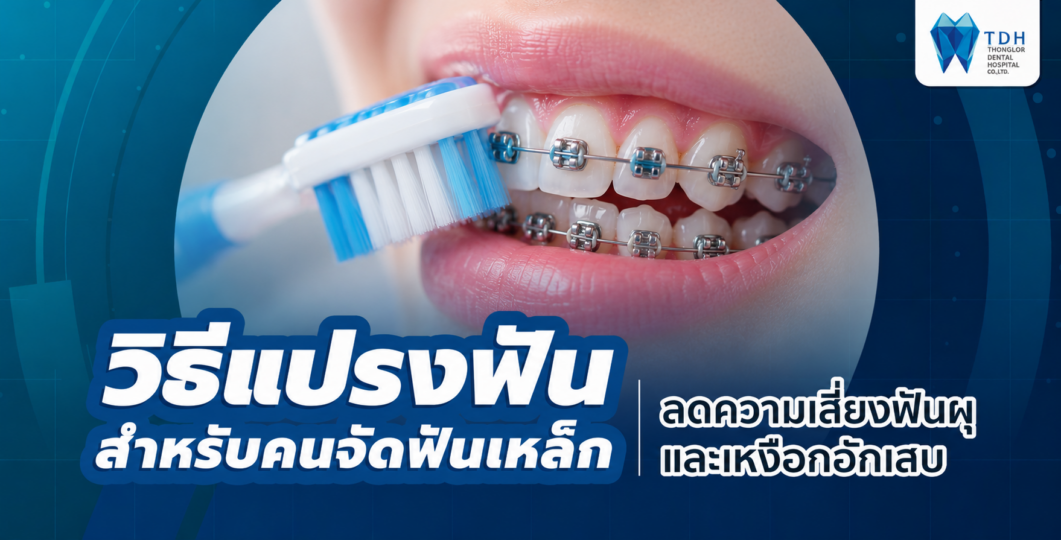
Brushing with metal braces takes more care than ordinary brushing, because brackets and wires allow food debris and plaque to build up easily. If cleaning is not thorough, the risk of cavities, gum inflammation and white spots on the teeth can increase. Learning the correct way to brush is therefore important for anyone wearing fixed braces.
Why Do People With Metal Braces Need Extra Cleaning?
Metal braces have many components, including brackets, wires and elastic bands, which are areas where food debris and plaque collect easily, especially around the brackets and along the gum line.
If cleaning is inadequate, problems may occur, such as:
-
Tooth decay: Plaque builds up and produces acid that damages the enamel.
-
Gum inflammation: The gums become swollen, red or bleed while brushing.
-
White spots on the teeth: These result from enamel mineral loss around the braces.
-
Bad breath: This is caused by food debris and bacteria building up in the mouth.
How to Brush Correctly With Metal Braces
You should brush at least twice a day, and clean your teeth after meals whenever you can. The steps are as follows:
1. Choose a Soft-Bristled Toothbrush and Fluoride Toothpaste
Use a soft-bristled toothbrush or an orthodontic toothbrush together with fluoride toothpaste to help remove plaque and reduce the risk of tooth decay.
2. Brush Above and Below the Brackets
Angle the bristles toward the gum line at about 45 degrees and move the brush gently to clean along the gum line. Then adjust the angle of the brush to clean above, below and around every bracket.
Brush the inner surfaces and chewing surfaces of the teeth thoroughly, just as you do the front surfaces.
3. Use an Interdental Brush to Clean Under the Wire
An Interdental Brush helps clean under the wire and around the brackets, areas that a regular toothbrush can hardly reach. Choose a suitable size and insert the brush gently, without forcing it into narrow spaces.
4. Floss at Least Once a Day
Flossing helps remove plaque between the teeth. People with braces may choose to use floss together with a floss threader or Super Floss to help pass the floss under the wire.
5. Check That Your Teeth Are Clean After Brushing
After cleaning, use a mirror to check whether any food debris is stuck around the brackets, wires or gum line, to make sure you have cleaned thoroughly.
How Many Times a Day Should You Brush With Metal Braces?
People with metal braces should brush at least twice a day, especially before bed, and brush after meals when convenient. If you cannot brush right away, rinse your mouth with clean water to help wash away food debris for the time being.
After brushing with fluoride toothpaste, spit out the toothpaste foam without rinsing with water straight away, so that the fluoride stays on the tooth surface for longer.
Cleaning Tools People With Braces Should Have
| Tool | Benefit |
|---|---|
| Soft-bristled toothbrush | Cleans the tooth surfaces and gum line |
| Interdental brush | Cleans around the brackets and under the wire |
| Super Floss or Floss Threader | Helps clean between the teeth |
| Fluoride toothpaste | Helps prevent tooth decay |
| Water flosser | Helps flush out food debris, but should not completely replace brushing |
How to Reduce the Risk of Cavities and Gum Inflammation During Orthodontic Treatment
In addition to brushing correctly, you should take the following extra steps to care for your oral health:
-
Cut down on frequent sweets and sugary drinks
-
Avoid hard or sticky foods that may damage your braces
-
Clean between your teeth every day
-
Have dental check-ups and scaling as recommended by your dentist
-
If your gums are swollen, bleed often, or you notice white spots on your teeth, have them examined
Caring for Your Teeth During Orthodontic Treatment With TDH Dental
Orthodontic treatment is not only about aligning the teeth to look good; it is also important to look after the health of your teeth and gums throughout treatment.
At TDH Dental, you can consult our experienced dental team to assess your oral health and plan your care during orthodontic treatment, as well as receive advice on how to clean your braces properly.
Because a beautiful smile after braces should come with healthy teeth and gums.
