

 ไทย
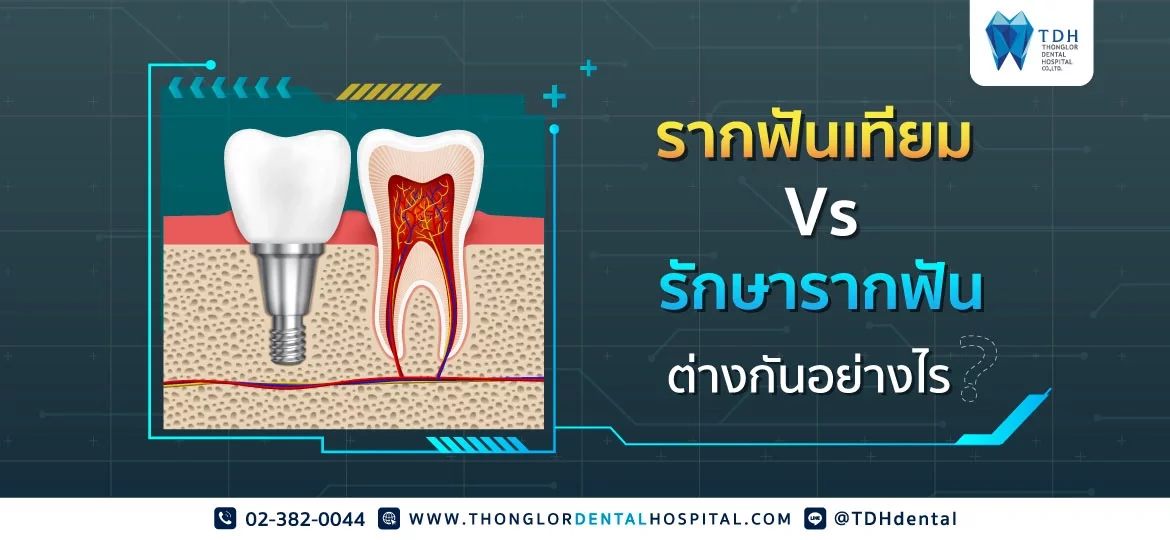
Dental implants and root canal treatment have similar-sounding names in Thai, which can confuse many people into thinking they are the same thing. In fact, the two treatments differ in technique, procedure and when they are needed. In this article we summarize what dental implants and root canal treatment are and how they differ.
What is a dental implant?
A dental implant is a titanium post shaped like a natural tooth root, placed in the jawbone to support a fixed dental prosthesis. Dental implants are considered the best way to replace teeth when a patient has lost natural teeth for various reasons, such as tooth extraction, gum disease or an accident. The titanium used for implants is compatible with the human body, and the crown or prosthetic tooth is designed to look and be colored as close to a natural tooth as possible. After treatment, patients can use their teeth normally, and the replacement teeth are strong and long-lasting.
How many types of dental implants are there?
Dental implants fall mainly into 3 types:
1. Conventional implant
This is the standard dental implant procedure. After the tooth is extracted, you wait for a period so the bone where the tooth was removed can heal completely. A minor surgery is then performed to place the implant in the jawbone, followed by a wait of about 3-4 months for the implant and bone to fuse fully, and then a crown is attached to the implant. Total treatment time is not less than 6 months. This type of implant has relatively few limitations, except that some patients with very little bone may need a bone graft before treatment.
2. Immediate implant (placed immediately after extraction of a natural tooth)
The implant is placed immediately after the natural tooth is removed. The advantages are that it reduces bone loss, reduces the number of steps and the treatment time, and lowers the chance of gum recession. The limitations are that the patient must have enough bone to hold the implant and must not have any pathology at the root tip of the tooth to be extracted. Suitable tooth positions for this method are the front teeth or premolars.
3. Immediate loaded implant (implant with immediate prosthetic attachment)
The implant is placed together with a crown (temporary or permanent) immediately, without waiting. The advantage is that it saves time compared with conventional implants, and it looks good because the patient has teeth at all times. However, this method has quite a few limitations and can be done only in some cases.
Caring for dental implants
Caring for teeth with dental implants is the same as caring for natural teeth: brush thoroughly, floss every day, and have an oral health check-up 1-2 times a year. This helps the implant and crown last a long time. Although implants cannot decay, poor care can still lead to gum inflammation.
What is root canal treatment?
Root canal treatment treats infection in the pulp chamber or root canal, the small area of tissue at the center of the tooth. The basic steps are to clean the pulp chamber by removing the infected tissue, disinfect what remains, then fill the root canal and restore the tooth so it is strong and looks normal again. The advantage of root canal treatment is that a decayed tooth can be saved without having to be extracted.
What are the reasons for needing root canal treatment?
The main reason for root canal treatment is severe tooth decay, or decay that goes deep to the pulp, causing severe toothache and making it hard to chew. This usually comes from leaving decay untreated for a long time instead of treating it early. Teeth that may need root canal treatment include:
- Teeth with decay so deep that it reaches the pulp
- Teeth that are cracked, broken or damaged to the point of reaching the pulp chamber
- Teeth cracked by habits that affect the pulp chamber, such as teeth grinding, chewing food too hard and clenching, which can let bacteria enter the pulp
- Gum disease problems or a dead tooth
- Other specific cases, such as correcting tooth alignment together with a crown
What happens if you do not have root canal treatment?
A tooth with decay or damage deep enough to reach the pulp that does not receive root canal treatment will usually cause severe pain that disrupts daily life, and bad breath often follows. In addition, untreated infection and inflammation in the root canal may spread to other teeth, causing decay in several teeth, or even spread to other organs, leading to eye inflammation, sinus inflammation or a bloodstream infection, which is very dangerous.
Caring for a tooth after root canal treatment
A tooth that has had root canal treatment should be cared for like a normal tooth: brush and floss regularly, and go to your dentist appointments for a follow-up check every 6 months. You should also take care not to bite or chew food that is too hard, because a root-treated tooth may be brittle and break easily.
How do dental implants differ from root canal treatment?
In summary, a dental implant replaces a lost tooth by placing a titanium post in place of the root and then fitting a crown over it, giving a new tooth that resembles the original. Root canal treatment, on the other hand
You can read more about root canal treatment in the article How is root canal treatment “good”? This article will help you get to know root canal treatment better, including how its benefits support oral health. If you would like to learn about dental implants, you can read the article What is dental implant ?
Do dental implants and root canal treatment have to be done by a specialist dentist?
If you are interested in dental treatment, including dental implantsand,Root Canal Treatment are detailed and complex treatments that should be performed by an experienced specialist dentist. Thonglor Dental Hospital (TDH) is a dental clinic that brings together specialist dentists who provide all areas of dental treatment, including dental implants and root canal treatment, safely.
If you would like to consult about teeth and oral problems, you can make an appointment to talk with a TDH Dental dentist directly about your oral health. That way, caring for your mouth and teeth becomes simple and hassle-free.
