

 ไทย
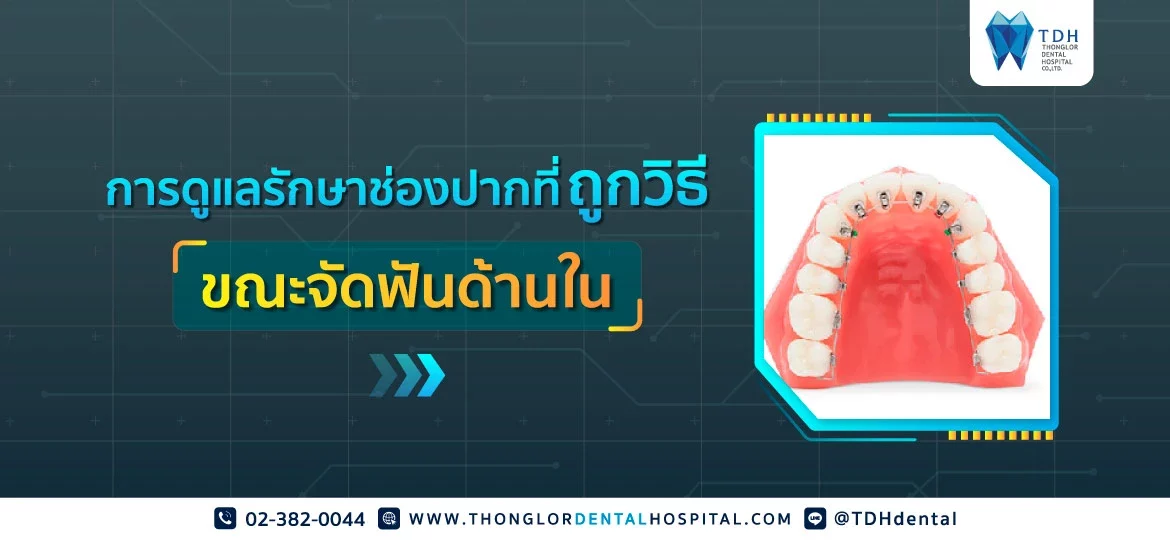
Lingual braces are an orthodontic technique in which the appliances are attached to the back of the teeth, so they cannot be seen from the outside. This suits people who want braces but feel self-conscious when others can see metal braces in their mouth. However, lingual braces are more complex than general braces and require extra care. Let’s look at how to care properly for your oral health during lingual braces treatment, and what problems to watch out for after treatment is finished.
Benefits of lingual braces
Many people choose lingual braces because they see advantages over general braces, which include:
- They are a hidden type of braces, so others cannot see the appliances from the outside, which makes you feel more confident when speaking or smiling.
- They affect pronunciation relatively little, because the appliances are smaller than general braces, so patients have less trouble with unclear speech than with regular braces.
- They do not leave white marks on the outer surface of the teeth after the appliances are removed.
- They can correct tooth alignment effectively, because special braces are used that are shaped and curved to suit each individual tooth.
Problems that may occur after lingual braces treatment
After the braces are attached or replaced with a new set, patients may feel tightness or soreness, discomfort in the mouth, or difficulty chewing at first. These symptoms gradually improve within 2-3 days. Many people may also feel irritation of the tongue and inner cheeks during the first 1-2 weeks, as they are not yet used to the appliances in their mouth.
However, lingual braces may cause more pain and annoyance than outer braces, because the appliances touch the tongue directly. They may scrape the tongue and cause sores, and may lead to more saliva than usual. People with lingual braces therefore need to be especially careful and take extra care of their oral health to avoid braces-related problems in the future.

How to care for your mouth and teeth while wearing lingual braces
To care for your oral health and teeth while wearing lingual braces, you can do the following:
- Avoid biting, gnawing and chewing hard and sticky foods, such as bones and ice, because they can damage the braces and delay treatment even further.
- Maintain oral hygiene regularly by brushing after meals and flossing regularly.
- See the dentist for an oral check-up, scaling (tartar removal) and fluoride polishing every 6 months while wearing braces.
- Attend appointments at the clinic so that your progress can be monitored and your braces changed on schedule, and follow the dentist’s instructions strictly.
- If you have any problems with your braces, or are not sure whether your braces are abnormal, see your dentist at the clinic promptly.
Why choose TDH Dental for lingual braces
Lingual braces are a more complex technique than general braces, so treatment must be performed by an expert specialist dentist. TDH Dental is a dental hospital with specialist dentists in every field, modern dental innovations and careful attention to service at every step, making it suitable for anyone interested in any type of braces, including safe, worthwhile and effective lingual braces.
In addition to regular lingual braces (Lingual braces) made of metal or ceramic materials, TDH Dental also offers Brava by Brius lingual braces, which use a special material that can move each tooth more efficiently and save even more treatment time than before. Anyone interested can ask for more information at every TDH Dental clinic branch.
