

 ไทย
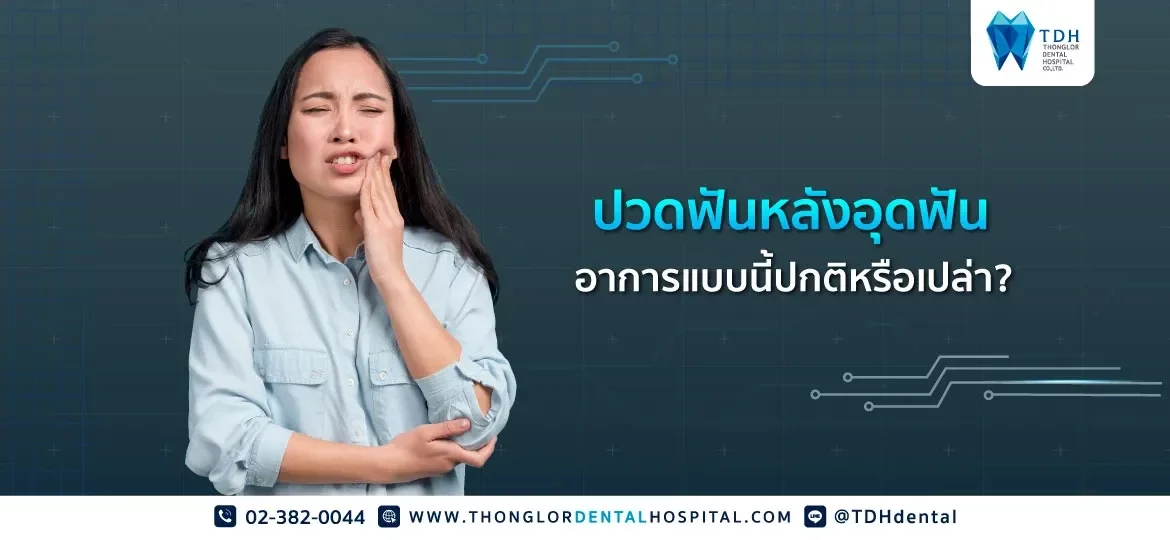
A dental filling is a type of tooth restoration in which filling material is used to close a cavity in the tooth so that it regains its original strength. Many people who have had a filling may find that their tooth aches afterwards, but is this normal for this kind of treatment? Is toothache after a filling normal, and do you need to go back to the dentist? To clear up these questions, we look for the answers here.
How Does Toothache After a Filling Happen?
Toothache after a filling is common and can happen for several reasons, such as:
- The sensory nerves inside the tooth were irritated by the drilling.
- The gum around the filled tooth was injured or is inflamed.
- A side effect of the local anaesthetic injection reaching a nerve in the jaw or gum, causing inflammation outside the tooth.
- Being triggered by very cold or very hot food, or sweet food.
- Being triggered by biting and the pressure of chewing.
Pain and tooth sensitivity after a filling that come from these causes are mostly not dangerous and go away on their own. Pain after a filling should go away within 2 – 3 days, and sensitivity after a filling should go away within 7 – 14 days. If there is no improvement after more than 2 weeks, you should see a dentist promptly for treatment and correction, because there may be other causes that will not go away by themselves.
What Does Pain at the Filled Tooth Feel Like?
Pain in a filled tooth feels quite different from pain elsewhere, because it can be felt as more severe and longer lasting than pain at other spots. This kind of pain can come from the use of the filling material or from drilling, which removes plaque or bacteria from the enamel or tooth structure. Some patients feel pain at the filled tooth that is hard to bear, and some have toothache that spreads to a headache or fever. If you find that you have continuous pain like this, see a dentist promptly before it develops into other illnesses.
Toothache Not Directly Related to the Filling
1. Abnormal bite
One common cause of toothache after a filling is that the filling is not in the correct position and gets in the way of your chewing. A filling that is too high makes the bite abnormal, so the teeth do not meet properly when you bite. A dentist can adjust the height of the filling to fix the problem.
2. Tooth sensitivity from an electrical charge
Tooth sensitivity from an electrical charge from the filling material happens when adjacent fillings contain different metals, for example one tooth has gold and the other has amalgam. When they touch, an electric current is produced. However, this is very rare.
How to Cope With Toothache
The goal of a dental filling is to close a decayed tooth or a hole to reduce pain. But if weeks have passed since the filling and you still have pain when you bite, eat, or even just open your mouth, the best thing to do is to go back to your dentist as soon as you can. The dentist can identify the cause and correct it. Taking good care of your mouth and teeth regularly can help reduce tooth decay and other dental problems, for example:
- Brushing twice a day helps keep your enamel strong and helps prevent tooth decay.
- Flossing every day helps prevent tooth decay and keeps your gums healthy.
- Seeing your dentist regularly is essential to detect problems before they need complex treatment.
- Preventive care is the best approach, but if you do need a filling, you should see a dentist for treatment.
If you need a filling and are looking for a dental clinic that meets standards, fillings at TDH Dental are carried out by specialist dentists who choose good equipment and filling materials, which helps reduce toothache after a filling, and who follow the correct procedures. If a patient has pain after a filling, they can see their dentist to consult and ask for advice on aftercare following treatment, which will ease the patient’s worries and let them receive the correct advice from the dentist.
