

 ไทย
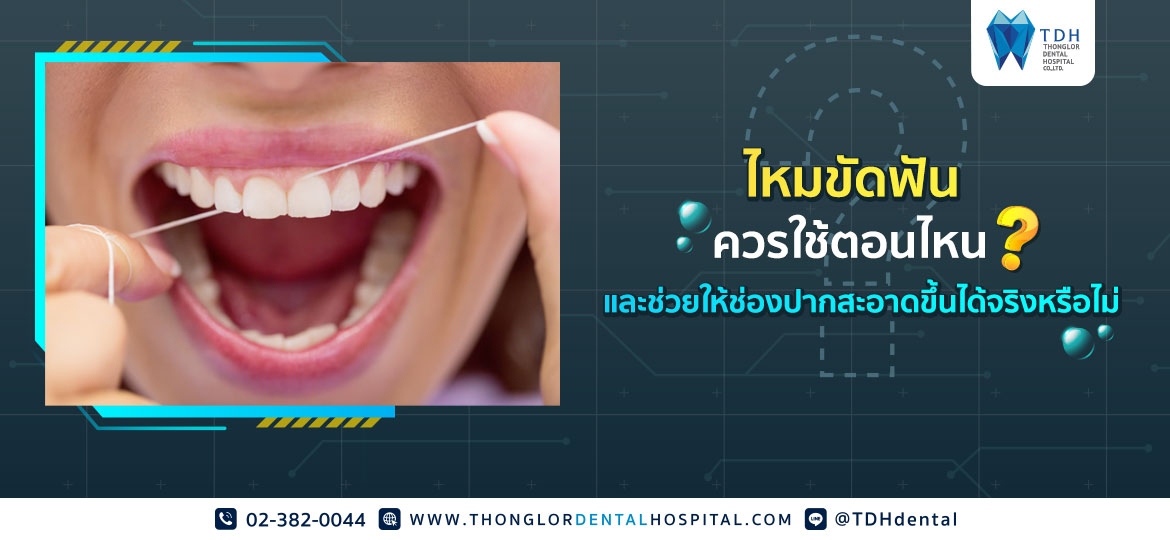
When it comes to cleaning your teeth, tongue and the other parts of your mouth, few people think of dental floss. But did you know that floss is one of the most useful cleaning tools for your teeth? It helps remove food debris and bacteria from between the teeth, where a toothbrush cannot reach. It is a very simple way to keep your mouth clean and fresh in a short time. But should you floss before or after brushing to do it correctly? In this article, TDH Dental answers that question for you.
The benefits of flossing that many people don’t know about
- It cleans teeth that are hard to clean, such as the inner molars, which a toothbrush may not reach, or crooked teeth
- It removes food debris that may be stuck between the teeth
- It helps reduce tartar build-up, because floss removes plaque before it can harden
- It helps prevent tooth decay and bad breath that can result from food debris decaying between the teeth
- It helps reduce gum inflammation caused by tartar that may become firmly attached to the tooth enamel
Should you floss before or after brushing?
The best time to floss is at night, before going to bed, because it is more effective at removing the bacteria that have built up over the whole day. Do it once a day.
We recommend flossing before brushing. Flossing first brings out the plaque and food debris. Once they have been removed, you then brush, which lets the fluoride in your toothpaste or mouthwash work better between and on the teeth. You can also use the dry brushing method, a technique that uses as little water as possible and no rinsing, so that the fluoride in the toothpaste stays on the tooth surface.
Why use dental floss instead of a toothpick?
Dental floss is a flexible, lightweight and durable synthetic fibre. It is convenient to use because it reaches between the teeth without causing harm, and it effectively removes food debris and bacterial plaque between the teeth.
A toothpick can also remove food stuck between the teeth, but it does more harm than good. Because a toothpick is hard and thick, it may create gaps between the teeth, and its sharp tip risks poking your gums. Floss is convenient and safe, and it removes food debris better than a toothpick or a toothbrush alone.
Steps for flossing correctly
Step 1: Pull out the right length of floss
Pull out about 12 inches (about one ruler’s length) of floss. This is a suitable length: not too short and not too long, so it is easy to use and easy to clean away food debris.
Step 2: Wind the floss around your fingers correctly
Once you have the right length, wind the floss around your middle finger, or whichever finger is most comfortable. Hold the floss with the thumb and index finger of each hand and pull it taut, so you grip it firmly and it does not slip easily. Be careful not to wind the floss too much around your little finger, as the grip will not be firm enough and the floss may slip from your hand when you start.
Step 3: Curve the floss into a C shape and gently clean between the teeth
While flossing, hug the floss around the tooth in a C shape, snug against the tooth. You can move it back and forth or up and down, whichever is easier for you. This lets the floss clean the walls of the gaps between the teeth better. We do not recommend holding the floss straight and flat and sawing it back and forth, because you may slip and cause gum inflammation.
Step 4: Clean the gum area
The gum tissue and the area under the gum line also need cleaning, because bacteria build up there and easily form tartar. Floss is therefore very important for this area, because if it is left alone it may lead to complications.
Step 5: Remove the floss when you have finished cleaning
When you have finished cleaning between the teeth, you can pull the floss straight out. If the gap between the teeth is tight, or food or a large piece of material is stuck, you can instead slide the floss out toward the front. Throw the floss away immediately after use and do not reuse it.
Flossing regularly and correctly has many benefits. It helps you take better care of your gum and tooth health, keeps your teeth and gums healthy and helps reduce bad breath. Do not forget to have a dental check-up every 6 months.
TDH Dental has an experienced team of dentists and modern equipment, ready to take the best care of your teeth and mouth. TDH dental clinic has 5 branches in Bangkok and the surrounding area: Thonglor, Punnawithi, Ratchaphruek, Iconsiam and Prince Hospital Suvarnabhumi. Every branch has a specialist dentist for clear aligners and a dedicated specialist dentist for veneers, ready to advise and care for you.
