

 ไทย
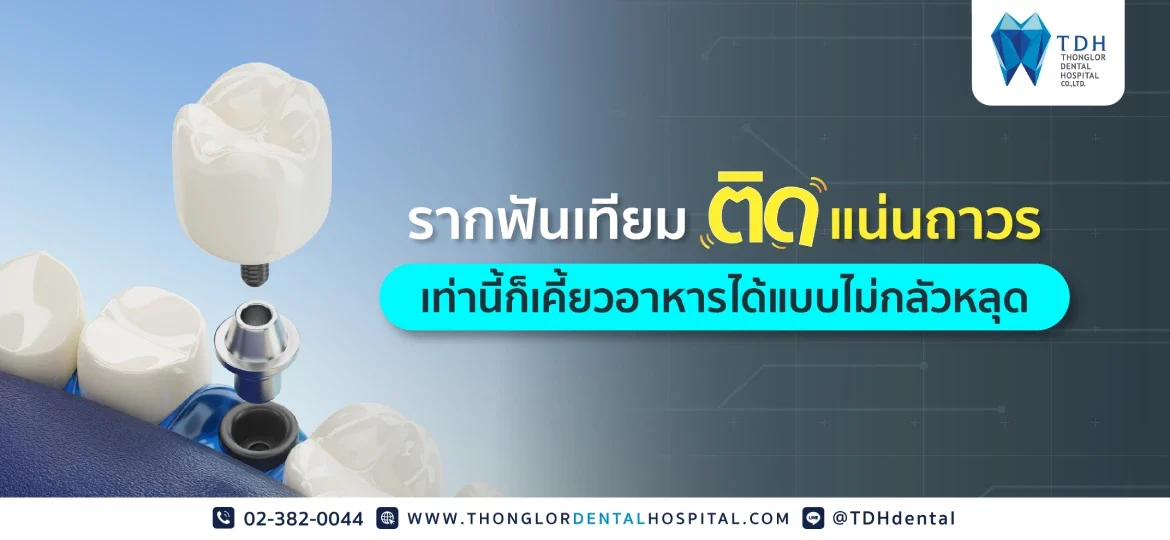
Many people who wear dentures lack confidence in daily life, especially at mealtimes, because dentures can come loose while chewing. This can affect overall personality and self-assurance. Dental implants are the answer to the shortcomings of dentures, because they are fixed permanently, so you can chew and talk fully without fear of them coming loose. If you would like more information on implants versus dentures, you can read our article comparing the differences between dental implants and dentures.
What is a dental implant?
Dental implants are made from materials that are highly compatible with the body, and replace a missing tooth including both the root and the tooth itself. Modern implants are usually a screw or cylinder made of titanium.
Titanium is a special metal: it bonds to bone with no intervening layer. This firm bonding of titanium to bone is called osseointegration. Another advantage of titanium is that it does not cause allergies, it is well accepted by the body, and it does not cause inflammation of the oral tissues. Because it is so compatible with human tissue, titanium is widely used in medicine, for example in implants for the hip and knee.
Implants are generally 6-15 millimetres long and 3-5 millimetres in diameter. Today there are many implant manufacturers, but only a few systems have studies and research on long-term results.
How is a dental implant placed?
The first step is a good, comprehensive treatment plan. X-ray images and models of the teeth from an impression help assess the amount of bone in terms of width and depth, so that the right implant size can be planned.
Dental implant treatment is a surgical procedure performed under sterile conditions. It takes about 45-90 minutes and uses local anaesthesia, so you do not feel any pain. Once the gum and tissue are numb, the dentist carefully opens the gum, drills the bone to a size that fits the chosen implant, and places the implant (the root part only). The gum is then stitched closed and left to heal. During this time, a temporary denture may be provided for use, depending on the case.
After the wound has healed and the implant has bonded firmly to the bone, which takes about 3 months, the dentist will schedule an appointment for an impression to make a crown that attaches to the implant. Making the crown takes about 1-2 weeks.
What makes dental implants “good”?
Implants make the tooth replacement fixed and permanent. The tooth is firmly attached and durable, with no risk of coming loose or shifting during the day as dentures can. Implants therefore fill the gap left by dentures, especially for chewing food, because patients can use that tooth to chew with confidence and without worrying that it will come loose.
Dental implant treatment at TDH Dental clinic is performed by specialist dentists, so patients can feel confident at every step of getting a dental implant. Importantly, we use only good-quality, safe materials, which helps make the implant more firmly attached and more durable than dentures, so patients can chew with more confidence and no longer need to fear their teeth coming loose while eating.
