
 ไทย
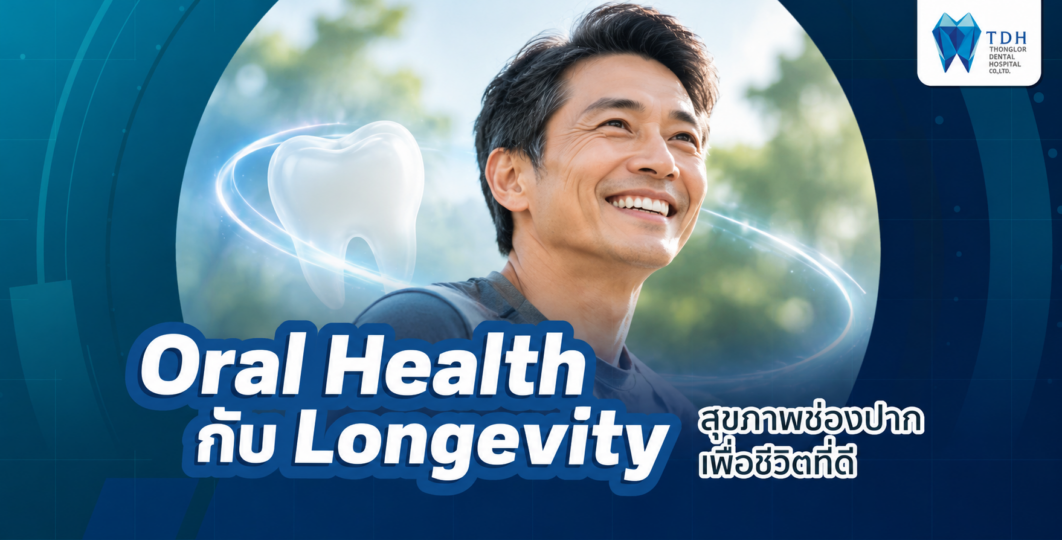
When people talk about longevity, the idea of living a long and good-quality life, many think of exercise, a nutritious diet, enough sleep or regular health check-ups. But did you know that oral health is another important component that should not be overlooked?
Teeth and the mouth do far more than create a beautiful smile. They are involved in chewing, speaking, swallowing and living everyday life with confidence. Especially in older age, how well your teeth function can affect the foods you choose to eat and your overall quality of life.
If you lose several teeth, have gum problems or cannot chew normally, eating certain types of food can become difficult, which may affect your daily life and long-term well-being.
Looking after your oral health is therefore not just about treatment when you have a toothache. It is part of Preventive Healthcare, which helps maintain the function of your teeth and supports your quality of life as you age.
What are oral health and longevity, and how are they related?
Oral health refers to a condition in which the teeth, gums and structures inside the mouth are in suitable health and can perform their functions, such as chewing, speaking and swallowing, without pain or abnormalities that affect daily life.
In modern healthcare, longevity focuses not only on the number of years lived, or lifespan, but also on healthspan, meaning the period of life in which you are healthy and able to carry out activities appropriately.
The link between oral health and longevity therefore lies in maintaining the health and function of the mouth throughout life.
For example, older adults who have natural teeth or well-functioning replacement teeth may be able to eat a wider variety of foods, talk comfortably and take part in social activities with more confidence.
This idea is consistent with the Lifelong Oral Health policy of the FDI World Dental Federation, which emphasises oral care from childhood through to older age through prevention, risk assessment and appropriate treatment.
However, good oral health does not directly mean you will live longer. It is one of the factors that supports long-term health and quality of life.
Why is oral health important for long-term quality of life?
1. Dental health, chewing and nutrient intake
Chewing is an important step in eating. When teeth are strong and function normally, it is easier to chew foods with a variety of textures.
On the other hand, people who have lost several teeth, have loose teeth or feel pain when chewing may avoid certain foods, such as fresh vegetables, some fruits or meats that require a lot of chewing force.
When eating remains limited over time, it may affect the variety of foods eaten and the intake of suitable nutrients, especially in older adults.
Preserving natural teeth that can still be saved, and considering replacement teeth when necessary, is therefore part of caring for chewing ability in the long term.
2. Gum health is related to overall health
Periodontitis is an inflammation of the tissues and bone that support the teeth. If it is not treated appropriately, it can cause teeth to become loose and may lead to tooth loss.
Research has found that periodontitis is associated with some systemic diseases, particularly diabetes. People who do not control their blood sugar well may be at greater risk of gum problems.
In addition, periodontitis has a statistical association with cardiovascular disease, but this association does not confirm that gum disease is the direct cause of those diseases in every case.
Treating periodontitis is therefore important for controlling inflammation in the mouth, reducing damage to the tissues that support the teeth, and keeping natural teeth healthy for longer.
3. Tooth loss can affect daily life
Natural teeth play important roles in chewing, pronunciation and the beauty of your smile.
When several teeth are lost, chewing efficiency may decrease, food choices may become limited, or some words may become harder to pronounce.
For older adults, tooth loss may also affect confidence in conversation and in eating together with others.
However, tooth loss does not mean everyone will have a lower quality of life, because function can be restored with dentures, dental bridges or dental implants, depending on each person’s suitability.
4. Oral health and oral frailty in older adults
As we age, some aspects of oral function may decline, such as chewing, swallowing, the movement of the tongue and lips, or saliva production.
This condition, in which several areas of oral function begin to decline, is related to a concept called oral frailty, or frailty of oral function.
People with these problems may begin to find it hard to chew food, take longer to eat, or have limitations in swallowing and speaking.
Assessing oral function at an early stage is therefore beneficial, especially for older adults who have underlying health conditions or limitations in caring for themselves.
That said, oral frailty does not mean that every older adult will have tooth or swallowing problems. It is one approach that helps healthcare professionals assess risk and plan care more comprehensively.
5. Oral health affects confidence and social life
Smiling, speaking and eating with others are part of everyday life.
People who have chronic toothache, bad breath from oral health problems, or limitations in using their teeth may feel less confident about talking and socialising.
Oral care is therefore related to quality of life in physical, mental and social terms, not only the appearance of your teeth.
What is dental wellness, and how does it differ from general dental treatment?
Dental wellness is a holistic approach to oral care that emphasises prevention, risk assessment and maintaining the function of the mouth in the long term.
This approach is not a special procedure that everyone must undergo. Rather, it is a shift in perspective from waiting for problems to occur and then treating them, to caring for and monitoring the health of your teeth and gums on an ongoing basis.
Examples of dental wellness approaches include:
-
Oral health check-ups and assessment of tooth decay risk
-
Assessment of gum health and the bone supporting the teeth
-
Checking for tooth wear and teeth-grinding or clenching habits
-
Assessment of chewing ability
-
Checking for dry mouth or low saliva
-
Personalised planning for prevention and monitoring of oral health
General dental treatment remains an important part of dental wellness when problems that need treatment are found.
How can you care for your oral health to support healthy aging at every stage of life?
Childhood: building a foundation of good oral health
Dental care should begin as soon as the first tooth appears, with emphasis on tooth brushing, fluoride toothpaste and healthy eating habits.
In addition, the development of baby teeth and permanent teeth should be monitored, along with age-appropriate assessment of tooth alignment problems.
Working age: preventing risks from accumulated habits
For working adults, watch out for tooth decay, gum disease, tooth wear and teeth grinding during sleep, which may be related to daily habits.
Eating sweet foods less often, cleaning your teeth properly and having regular oral check-ups all help reduce these risks.
Middle age: preserving natural teeth and gum health
As you get older, pay attention to periodontal health, teeth that have been filled or crowned, and the assessment of damage from long-term use of your teeth.
If you have lost teeth or have bite problems, you should have an examination to plan the restoration of chewing function as indicated.
Older age: focusing on oral function and quality of life
Older adults should have their chewing ability, gum health, low saliva and any problems with dentures or replacement teeth assessed.
For those with limitations in swallowing, eating or caring for their own mouth, an assessment together with other healthcare professionals may be necessary.
7 ways to care for your mouth for a good quality of life in the long term
1. Brush your teeth at least twice a day
Use fluoride toothpaste and brush all surfaces of your teeth, with particular emphasis on brushing before bed.
2. Clean between your teeth regularly
Use dental floss or interdental cleaning tools as appropriate to help reduce the build-up of dental plaque.
3. Reduce how often you eat and drink sugary foods and drinks
Especially the habit of sipping sweet drinks or snacking throughout the day, which increases the risk of tooth decay.
4. Avoid smoking and tobacco products
This is because they are associated with the risk of periodontal disease, oral cancer and other health problems.
5. Watch for any abnormalities in chewing
If you have difficulty chewing, tooth pain, loose teeth, or avoid certain types of food, you should have the cause investigated.
6. Manage underlying health conditions alongside your oral health
Especially if you have diabetes or take medication that causes dry mouth, you should tell your dentist about your health history and the medications you use.
7. Have oral check-ups according to your individual risk
Regular dental check-ups help your dentist assess problems at an early stage. The appropriate interval depends on each person’s oral health and level of risk.
Frequently asked questions about oral health and longevity (FAQ)
Is oral health really related to longevity?
It is related in terms of health and quality of life, particularly the ability to chew, speak, swallow and socialise. However, it cannot yet be concluded that caring for your teeth directly makes you live longer.
Does gum disease affect general health?
Periodontitis is associated with some systemic diseases, such as diabetes, and shares risk factors with other chronic diseases. However, this does not mean gum disease is the direct cause of those diseases in every case.
Does tooth loss reduce quality of life?
It may affect chewing, speaking and confidence in some people, but restoration or replacement of teeth can be considered to restore function as appropriate.
Do older adults need to have all their natural teeth?
You do not need to have every tooth to have a good quality of life. What matters is that your teeth and mouth can function appropriately, which may rely on natural teeth together with replacement teeth as needed.
Can dental implants help with longevity?
Dental implants may help restore chewing and quality of life for some people who have lost teeth, but it should not be claimed that having dental implants directly extends lifespan.
Does dental wellness require special procedures?
No. Dental wellness care can begin with dental check-ups, gum care, disease prevention and adjusting oral care habits, with procedures considered only when indicated.
At what age should you start caring for your oral health for healthy aging?
You should start in childhood and continue throughout life, because preventing tooth decay and periodontal disease early is an important foundation for maintaining long-term oral health.
Oral health and longevity: start long-term oral care at TDH Dental
Longevity does not only mean living a long life. It also includes the ability to live with good quality as you age, whether that is eating, speaking, smiling or doing the activities you enjoy.
Oral health is therefore another important component of this idea, because the teeth, gums and structures inside the mouth play a role in daily life at every age.
Preventive dental check-ups, gum care, preserving natural teeth that can still be saved, and restoring chewing function when necessary are all approaches that help support quality of life in the long term.
If you would like to start caring for your oral health with a dental wellness approach, you can come for an examination and consultation with the experienced dental team at TDH Dental to assess your teeth, gums and oral function, and plan care that suits you as an individual.
Because a good quality of life in the future can begin with caring attention to your oral health starting today.
References
-
FDI World Dental Federation — Lifelong Oral Health (Revised 2026)
-
FDI World Dental Federation — Oral Health for Healthy Ageing
-
International Dental Journal — Oral Health for Healthy Ageing (2024)
-
National Institute of Dental and Craniofacial Research — Diabetes & Oral Health
