

 ไทย
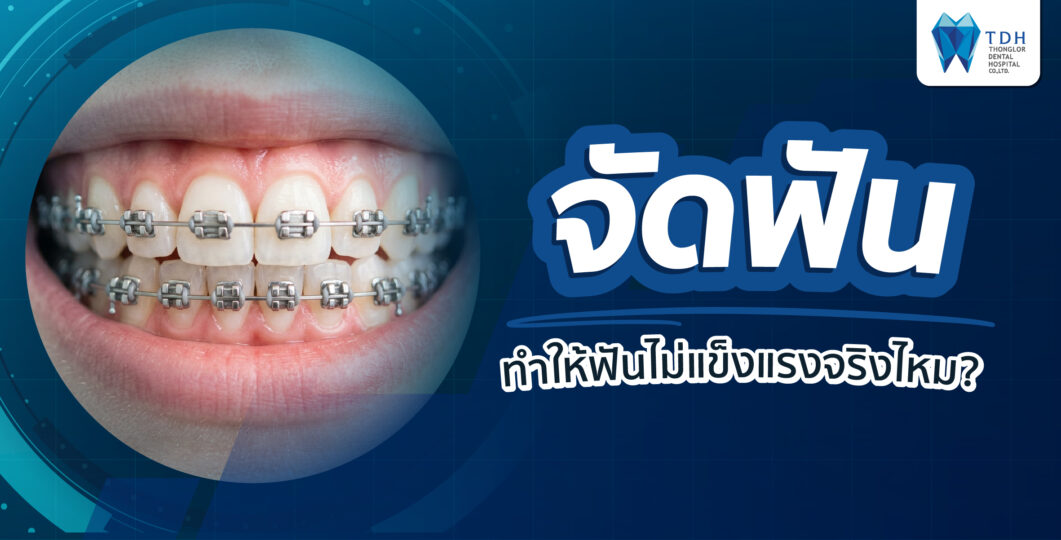
“Teeth become loose and weak after braces” – is it true?
One of the most common misunderstandings about braces is the belief that teeth will be weak afterwards, will loosen easily, or are more likely to fall out sooner than normal.
In fact, braces do not weaken your teeth or cause a permanent loss of strength when treatment is carried out by a specialist orthodontist and you look after your oral health properly.
The feeling that teeth are “loose” during treatment is part of the natural process that allows teeth to move into their new positions.
Why do teeth feel loose or move during orthodontic treatment?
Braces work by applying appropriate force to gradually move teeth through the bone that supports them.
When teeth begin to move, a biological process called Bone Remodeling takes place, in which the bone adapts.
- On one side, the bone breaks down slightly
- On the other side, new bone is formed to support the tooth’s new position
This process allows teeth to move safely.
So feeling tightness, mild soreness, or slight tooth movement during treatment is considered normal.
After braces, will teeth be as strong as before?
The answer is that teeth become firmly attached to the supporting bone again after treatment ends and the retention phase has been completed.
Once the teeth have moved to their ideal positions, the body builds new bone around the tooth roots to support their new positions.
If patients follow their dentist’s instructions closely, the teeth can function normally and remain as strong as before.
Why do many people think teeth are weak after braces?
1. Not wearing a retainer as advised
After braces, teeth naturally tend to move back towards their original positions.
If you do not wear your retainer consistently, teeth may tilt, become crooked, or your bite may change.
This is not the result of weak teeth, but of a lack of retention after treatment.
2. Gum disease or periodontal disease
The main cause of loose teeth in the long term is gum disease and periodontal disease.
When the bone supporting the teeth is destroyed by inflammation, teeth can become loose and lose their stability.
So taking care of your gum health during orthodontic treatment is extremely important.
3. Poor oral hygiene
Braces can make it easier for food to get trapped.
If teeth are not brushed thoroughly, the following may occur:
- Tooth decay
- Gum inflammation
- Tartar build-up
- Periodontal disease
These affect your dental health more than braces themselves do.
How do braces benefit dental health?
In many cases, braces actually improve dental health in the long term.
Makes teeth easier to clean
Well-aligned teeth make it easier to:
- Brush thoroughly
- Floss more easily
- Reduce plaque build-up
Reduces the risk of tooth decay and gum disease
As crowding decreases, bacteria build-up between the teeth decreases too.
Improves the bite
Braces help distribute chewing forces evenly.
This reduces the risk of:
- Tooth wear
- Tooth fractures
- Jaw joint problems
Helps preserve natural teeth in the long term
Teeth that are well aligned and have a proper bite tend to last longer, and the risk of future dental problems is lower.
How can you keep teeth healthy during braces?
To get effective results and keep your teeth healthy, you should:
- Brush at least twice a day
- Use dental floss or interdental cleaning tools
- Attend your dentist appointments regularly
- Avoid foods that are too hard, sticky, or crunchy
- Have regular scaling and oral health check-ups
- Wear your retainer as advised after braces
Summary
Braces do not make teeth weak. They are a dental treatment that uses safe tooth-movement principles to adjust the position of the teeth and the bite.
Feeling that your teeth move during treatment is normal, and after treatment the supporting bone adapts until the teeth naturally become stable again.
What affects the long-term strength of your teeth more than braces is how well you care for your oral health, prevent gum disease, and consistently follow your dentist’s instructions.
If you are considering braces, consulting a specialist orthodontist at TDH Dental will help you receive a suitable treatment plan and be confident that your teeth will be cared for safely throughout treatment.
