

 ไทย
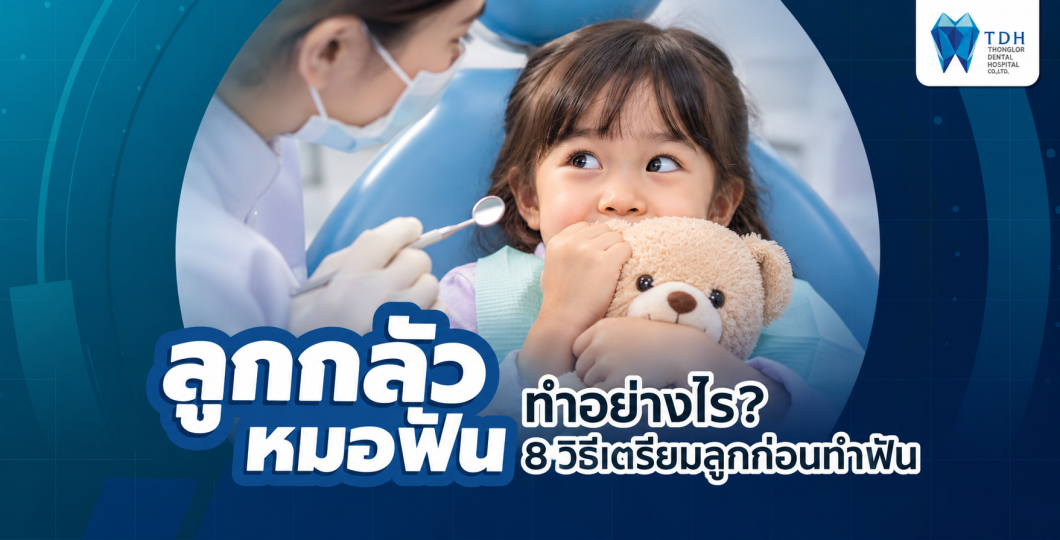
“I don’t want to go to the dentist!” “I’m scared it will hurt!” Or you simply mention a dental check-up, and your child starts crying and refuses to leave the house.
This situation can happen in many families, especially with young children who are not yet familiar with a dental clinic, or children who have had a bad experience at the dentist before.
Fear of the dentist in children does not necessarily mean the child is stubborn or uncooperative. It may come from unfamiliarity with the place, fear of pain, the sound of the instruments, or anxiety about being in a situation they cannot predict.
What matters most for parents is not to make the child stop being afraid immediately, but to help the child feel safe, gradually build familiarity, and learn that taking care of their teeth is something they can understand.
In this article, TDH Dental has compiled 8 ways to prepare your child before a dental visit, along with guidance on what to do when your child cries or refuses to open their mouth, to help make seeing the dentist a better experience for both children and parents.
Why are children afraid of the dentist?
Before preparing your child for the clinic, parents should first understand that fear of the dentist can have many causes.
1. Fear of the place and the unfamiliar
The dental chair, the examination light, the sound of the instruments, and staff the child has never met can make a child feel uncertain, especially at the first dental visit.
2. Fear of pain during treatment
Some children may have heard adults talk about tooth extractions or anesthetic injections, and come to believe that going to the dentist always hurts.
3. A previous bad dental experience
If a child was treated while in severe tooth pain, or had an experience that frightened them, they may remember that feeling and not want to return to the clinic.
4. Fear of being separated from Mom and Dad
Some young children may feel unsafe in a new environment, or worry that they will have to stay in the treatment room alone.
5. Sensitivity to sound, light, or touch
Some children may feel uncomfortable with the sound of the equipment, smells, bright lights, or the sensation of touch inside the mouth, especially children with sensory or individual developmental needs.
Understanding the root of the fear helps parents and the dental team choose preparation methods that suit each child better.
8 ways to prepare your child before a dental visit to reduce anxiety and build confidence
Method 1: Talk about dental visits in positive words
Before the appointment, parents should talk with their child about seeing the dentist in a relaxed tone, using simple explanations suited to the child’s age.
For example:
“Tomorrow we’re going to have the dentist help count your teeth and see whether they are strong and healthy.”
Avoid threatening words such as “If you don’t brush your teeth, the dentist will pull them out” or “If you misbehave, we’ll go get a shot,” because they may cause the child to associate dental care with punishment.
In addition, avoid promising “it definitely won’t hurt” if you do not yet know the treatment steps, because if some discomfort does occur, the child may lose trust.
Method 2: Play dentist at home
Play is an activity children are familiar with. Parents can use dolls, toothbrushes, or toys to recreate the atmosphere of a dental check-up.
Example activities include:
-
Let your child be the dentist and count the doll’s teeth
-
Switch roles so your child is the patient and tries opening their mouth
-
Use an ordinary mirror to help your child look at their own teeth
-
Practice sitting still and opening wide for a short time, voluntarily
These activities help children learn the basic steps through play, without having to face an unfamiliar situation all at once.
Method 3: Read storybooks or look at pictures about dental check-ups
Storybooks, illustrations, and videos for children can help your child understand the atmosphere of the clinic and what will happen during the examination.
Choose content that presents dental care in a friendly, age-appropriate way and does not emphasize images or sounds that might frighten the child.
This technique is consistent with the concept of Positive Pre-visit Imagery, which uses positive images and media to help build familiarity before seeing the dentist.
Method 4: Choose an appointment time when your child is in a good mood and well rested
A child who is sleepy, hungry, or very tired may find it harder to cope with a new situation.
Parents should therefore choose a time when their child is usually in a good mood, such as in the morning or a time that does not coincide with nap time.
For a routine check-up, you may let your child have a light meal and clean their teeth before coming to the clinic.
However, if the treatment involves sedation or general anesthesia, you must follow the fasting instructions for food and water given directly by the treating team.
Method 5: Let your child bring something familiar
A favorite doll, a small blanket, or a toy your child is attached to may help your child feel safer in a new place.
Parents can ask the clinic in advance whether such items can be brought into the treatment room, as long as they do not interfere with cleanliness or the safety of treatment.
Method 6: Give your child a chance to take part
Some children feel afraid because they do not know what will happen and feel they have no say in decisions.
Letting your child make small choices may help increase their confidence, for example:
-
Choose which doll to bring along
-
Choose a storybook to read while waiting
-
Choose to raise a hand as a signal when they need a break, if the dentist considers it appropriate
-
Ask the dentist about any instruments they are curious about
However, the choices offered to a child should be things that are actually possible and do not affect the safety of the treatment.
Method 7: Tell the dentist about your child’s fears in advance
If your child has had a bad dental experience, has cried a lot before, or cannot tolerate certain sounds and sensations, parents should share this information with the clinic before the appointment day.
Information worth sharing includes:
-
Past dental history
-
What makes your child afraid or uncomfortable
-
Underlying medical conditions and medications
-
Developmental or sensory needs
-
Comforting methods that have helped your child relax in the past
This information helps the dental team plan communication and care that better suit your child.
Method 8: Praise your child’s effort after the visit
After the examination, parents should praise their child’s effort, even if the child was not able to complete every step.
For example:
“Today you were brave enough to try sitting in the dentist’s chair. Well done!”
Or
“Thank you for trying to open your mouth so the dentist could look at your teeth.”
Specific praise helps children know what they did well and may encourage cooperation next time.
Avoid comparisons such as “Why aren’t you as brave as your big brother/sister?” or “Other kids don’t cry,” because they may make the child feel ashamed and even more anxious about seeing the dentist.
How does the Tell–Show–Do technique help children become familiar with dental care?
One communication method used in pediatric dentistry is Tell–Show–Do, which means explaining, demonstrating, and then doing.
Tell — explain
The dentist explains the steps in language the child understands, for example, “The dentist will use a tiny mirror to look at your teeth.”
Show — demonstrate
The dentist shows the child the instruments or demonstrates their use appropriately, so the child becomes familiar with what is going to happen.
Do — carry out as explained
The dentist performs the examination or treatment following the steps explained, while observing how the child feels and adjusting communication as appropriate.
This is one of the approaches that the American Academy of Pediatric Dentistry (AAPD) recommends considering in guiding children’s behavior, with an emphasis on building trust and cooperation with the patient.
However, no single method suits every child. The choice of technique should take into account each child’s age, development, health history, fears, and need for treatment.
What should I do if my child refuses dental treatment, cries, or won’t open their mouth?
When a child starts crying or refuses to be examined, parents should not rush to scold them or force them to stop being afraid immediately.
Crying may be a way of communicating that the child feels unsafe, tired, or does not understand what is happening.
Approaches that may help include:
-
Speak to your child in a calm tone and listen to their feelings
-
Ask the dentist to explain the steps appropriately
-
Consider a short break, if it is possible and safe
-
Use demonstrations or play to build familiarity
-
Assess whether treatment is needed right away or a follow-up visit can be scheduled
For a routine check-up with no urgency, the dentist may consider letting the child become familiar gradually or splitting the care into several visits.
However, if your child has severe tooth pain, an infection, or a medical need for treatment, other options may need to be considered, with the child’s safety as the top priority.
If my child is very afraid of the dentist, do they need laughing gas or general anesthesia?
Not always. Some children can have their examination or treatment using non-pharmacological behavior guidance methods, such as Tell–Show–Do, positive reinforcement, and distraction.
For children with high anxiety or complex treatment needs, the dentist may consider additional methods as indicated, such as:
-
Nitrous oxide with oxygen (Nitrous Oxide–Oxygen)
-
Sedation
-
General Anesthesia
These methods have different indications, contraindications, and safety-monitoring requirements. They must be properly assessed and carried out by trained personnel with standard-compliant equipment.
Fear of the dentist alone therefore does not mean that every child needs general anesthesia.
When should I take my child to the dentist for the first time?
The American Dental Association (ADA) recommends that a child have a first dental check-up within 6 months after the first baby tooth comes in, and no later than age 1.
The first visit allows the dentist to assess the health of the teeth, gums, and oral development, and to advise parents on dental care and the use of fluoride.
Another benefit is that the child has a chance to become familiar with seeing the dentist before severe tooth decay or toothache develops.
However, starting dental check-ups at a young age does not guarantee that a child will not be afraid of the dentist, but it is an opportunity to build familiarity and encourage long-term dental care habits.
Frequently asked questions about children who fear the dentist (FAQ)
My child is very afraid of the dentist. Should I force them to go for a check-up?
You should take your child for check-ups as needed, and tell the dental team about their fear so they can plan the care. Do not use threats or punishment to make a child accept treatment.
My child cries every time they have dental work. Is that abnormal?
Crying is a response that can occur in children, especially when they are not yet familiar with the situation. However, if a child cries intensely or has persistent fear, the dentist should assess appropriate ways to help.
My child won’t open their mouth for the dentist. What should I do?
Parents should offer encouragement and let the treating team consider ways to communicate or build familiarity. If the examination is not urgent, it may be possible to split it into several steps or schedule a follow-up visit.
Should I tell my child that dental treatment won’t hurt?
You should not promise that it won’t hurt at all if you do not yet know the steps. Explain things to your child truthfully, and let the dentist plan appropriate pain management.
Can parents stay in the treatment room with their child?
It depends on the child’s age and needs, the type of treatment, and safety requirements. You should ask and plan together with the dental team before treatment begins.
Can a child who was very afraid of the dentist return to normal dental care?
Some children can gradually rebuild trust and cooperation through proper preparation and techniques, but the time frame and results vary from person to person.
How can a child who is sensitive to sound or touch have dental treatment?
You should inform the dental team in advance so they can consider adjusting the environment, using visual aids, reducing stimulation, or using communication techniques suited to the child.
Prepare your child before dental treatment and create a good experience at TDH Dental
A child being afraid of the dentist does not mean they cannot receive oral health care, because fear may gradually lessen when a child is properly prepared and has the chance to build trust with the dental team.
Positive conversations, role-play, choosing the appointment time, and praising your child’s effort are all things parents can start at home.
If you are worried that your child is afraid of the dentist, won’t open their mouth, or has had a bad dental experience, you can bring your child for an examination and consultation with the experienced dental team at TDH Dental to assess oral health and jointly plan care suited to each child’s development and needs.
Because caring for your child’s smile is not only about keeping teeth healthy, but also about building confidence and trust in dental care from childhood.
Why are children afraid of the dentist? Understand the causes before helping your child
Each child has different fears and responds differently to new situations, and anxiety about dental care may come from several factors combined.
1. Fear of the unfamiliar
For a young child, a dental clinic is a place full of new things, including the dental chair, the examination light, instruments, and the sounds of various equipment.
When they do not know what will happen, children may feel unsafe and express it by crying, refusing to enter the treatment room, or refusing to open their mouth.
2. Fear of pain
Some children may have heard adults say that dental work hurts, or seen people close to them show fear of dental treatment.
These experiences or words may lead a child to believe that going to the dentist will always hurt, even though a routine dental check-up may not cause any pain.
3. A previous bad dental experience
A child who was treated while in severe tooth pain, or who felt afraid during dental work, may remember that experience and not want to see the dentist again.
In this case, building trust may take time, and the dentist should be told about the child’s history before treatment begins.
4. Fear of separation from parents
Some young children may feel anxious in a new place, or be unsure whether Mom and Dad will be nearby during the examination.
Involving parents in the care as appropriate may help some children feel more confident.
5. Sensitivity to sound, light, or touch
Some children may be sensitive to the sound of the instruments, bright lights, smells in the clinic, or the feeling of equipment in the mouth.
These factors may be especially important for children whose developmental or sensory processing needs differ from those of other children.
AAPD recommends that dentists consider the child’s age, development, temperament, past experiences, health history, and individual needs before choosing an approach to help the child cooperate during treatment.
