

 ไทย
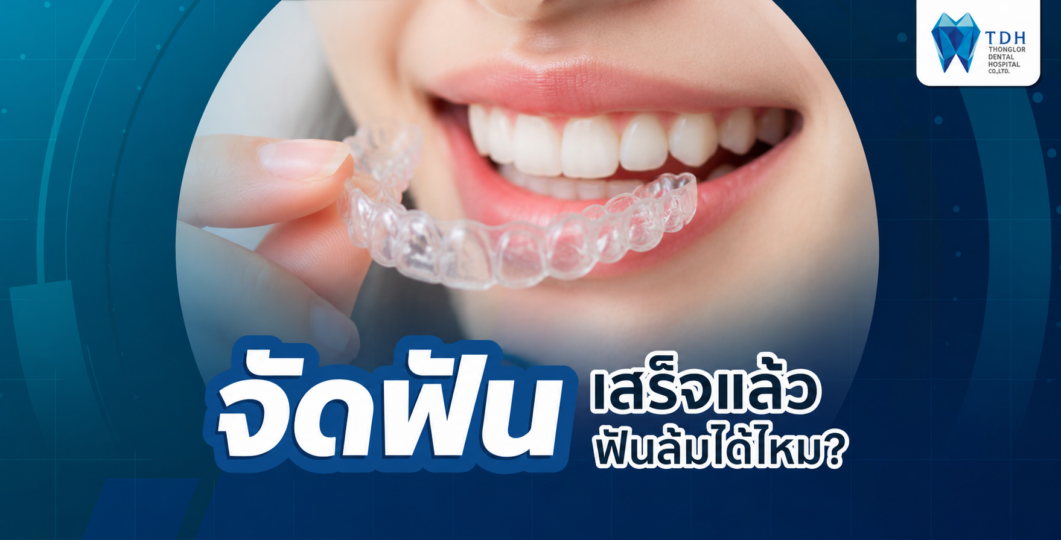
Many people think that once braces are finished and the appliances are removed, their teeth will stay beautifully aligned forever. In truth, teeth can shift or relapse after braces, especially if a retainer is not worn consistently. This is called Orthodontic Relapse, and it can make teeth crowded, gapped or misaligned again. Aftercare is just as important as the period when you are wearing braces.
Why Can Teeth Shift After Braces Are Finished?
After the braces are removed, the bone and tissues around the tooth roots still need time to adapt to the new tooth positions. Teeth can also move naturally throughout life.
Causes that may make teeth move after braces include:
-
Not wearing a retainer: a major factor that increases the chance of teeth returning to their original positions
-
Wearing a retainer inconsistently: neglecting to wear it may cause teeth to gradually change position
-
A damaged or ill-fitting retainer: the appliance cannot hold the teeth in position properly
-
Changes with age: teeth may naturally shift or become more crowded as we get older
-
Problems with the gums and the bone supporting the teeth: severe periodontal disease can cause teeth to shift or become loose
Warning Signs That Your Teeth Are Shifting After Braces
If you notice the following changes, they may be a sign that your teeth are starting to move.
-
Front teeth that used to be neatly aligned start to overlap or become crooked
-
There are larger gaps between the teeth
-
The retainer feels unusually tight or no longer fits
-
Your bite feels different from before
-
Some teeth start to tilt or rotate from their original positions
If you notice any abnormalities, consult your dentist for an assessment before the teeth move further.
How Does a Retainer Help Prevent Teeth From Shifting?
A retainer (Retainer) is an appliance that helps hold the teeth in position after braces to reduce the chance of them moving back to their original positions. The main types are:
-
Removable retainers: such as wire retainers and clear retainers, which can be taken out for eating and cleaning
-
Fixed retainers: a wire bonded behind the teeth that holds them in position without you having to put it in or take it out, but it needs to be kept clean and its bond checked regularly
The choice of retainer type depends on each person’s teeth and treatment plan.
How Long Do You Need to Wear a Retainer After Braces?
In general, the dentist may recommend wearing the retainer for several hours a day at first, before changing to wearing it only while sleeping, as appropriate.
However, long-term retainer wear is important because teeth can move throughout life. The American Association of Orthodontists (AAO) recommends maintaining orthodontic results by continuing to wear a retainer as advised by your dentist.
If Teeth Have Shifted After Braces, Do You Need Braces Again?
Not necessarily, because the solution depends on how far the teeth have moved, for example:
-
Slight tooth movement: the dentist may consider adjusting or replacing the retainer, if appropriate
-
Moderate tooth movement: additional treatment with braces or clear aligners may be needed
-
Significant tooth movement: new orthodontic treatment may need to be planned to correct the tooth positions and bite
If your retainer does not fit or causes pain, do not force it on or bite down to push it into place, as this may put inappropriate force on the teeth and surrounding tissues.
Caring for Your Smile After Braces with TDH Dental
Finishing braces does not mean the care of your smile is over, because keeping the teeth in position is important in the long term.
At TDH Dental you can consult our experienced dental team to assess tooth alignment after braces, check that your retainer is suitable, and plan how to maintain tooth position, including considering options such as the TDH Smart Retainer, as appropriate for each person.
A beautiful smile after braces should be cared for continuously to maintain the results in the long term.
