 ไทย
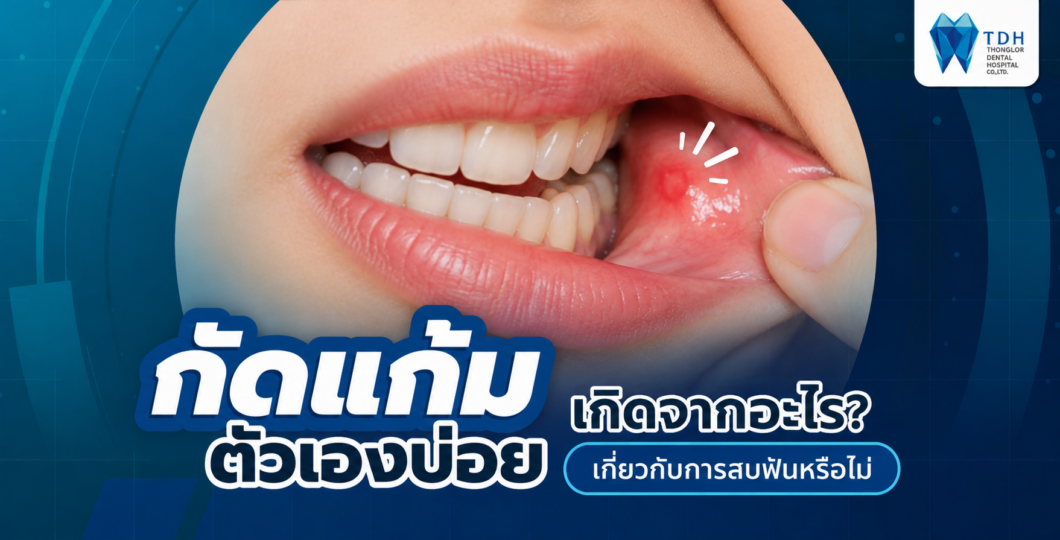
Has this happened to you? You are eating, and suddenly you bite the inside of your cheek and it hurts or turns into a sore. For some people it happens only occasionally, but others repeatedly bite the same spot, which may be related to a misaligned bite, tooth position or chewing habits. Understanding the cause helps you prevent injury and look after your oral health appropriately.
Why do I keep biting my cheek?
Cheek biting happens when the soft tissue on the inside of the cheek gets caught between the upper and lower teeth while biting or chewing. Factors that may be involved include:
-
Misaligned bite: The upper and lower teeth do not meet properly, making it easier for the cheek tissue to be bitten.
-
Crowded or tilted teeth: The position of some teeth may cause rubbing against, or biting of, the cheek.
-
Chewing too fast: Rushing through meals or talking while chewing may cause you to accidentally bite your cheek.
-
Ill-fitting dentures or crowns: Dental appliances with an unsuitable shape or bite may cause injury.
-
Stress or a cheek-biting habit: Some people unconsciously bite or chew the inside of their cheek when concentrating or feeling stressed.
Is frequent cheek biting related to the bite?
A misaligned bite (malocclusion) is one factor that may cause frequent cheek biting, especially when the upper and lower back teeth do not relate to each other properly, or when some teeth tilt toward the cheek.
A misaligned bite may cause problems such as:
-
Repeatedly biting the same spot on the cheek while chewing
-
Sores or irritation of the tissue inside the cheek
-
Pain while eating
-
White marks or thickened tissue from chronic rubbing
However, not every case of cheek biting is caused by a misaligned bite, so a dentist should examine the tooth position and bite before concluding the cause.
Is it dangerous if I keep biting my cheek until it becomes a sore?
In general, minor sores from cheek biting can heal on their own within about 1–2 weeks, as long as there is no repeated biting or rubbing.
But if the same area is injured repeatedly, it may lead to inflammation, a chronic sore, or thickened tissue.
If you have a mouth sore that does not heal within 2 weeks, or you notice a lump, an unusual white or red patch, or bleeding for no known reason, you should see a dentist for an examination. Do not assume it is just a cheek-bite sore, because there may be other causes that need further investigation.
How to bite your cheek less and care for the sore at home
If you accidentally bite your cheek and it hurts, you can take basic care of yourself as follows:
-
Chew more slowly: Avoid rushing through meals or talking while chewing.
-
Avoid irritating foods: Such as very spicy, very sour or hard, crunchy foods, if you have a mouth sore.
-
Rinse with warm salt water: This helps clean the mouth and soothe irritation.
-
Keep your mouth clean: Use a soft-bristled toothbrush and brush carefully around the sore.
-
Have your tooth position and bite checked: If you often bite your cheek repeatedly, see a dentist to assess the cause.
Do not try to grind your teeth or adjust a crown yourself, as this may damage your teeth and bite.
Do I need braces if I often bite my cheek?
Not necessarily, because the solution depends on each person’s cause.
If it is caused by chewing habits, you may start by adjusting those habits. But if it is related to tooth position or a misaligned bite, the dentist may consider suitable treatments such as:
-
Adjusting a problematic crown or restoration
-
Braces to correct tooth position or bite in cases where it is indicated
-
Managing the habit of unconsciously biting the cheek repeatedly
Braces are not a necessary treatment for everyone who bites their cheek.
Get your bite assessed at TDH Dental
Frequent cheek biting may seem minor, but if it keeps happening and causes chronic sores, the cause should be investigated to prevent further injury.
At TDH Dental, you can consult our experienced dental team to assess tooth alignment, bite and the health of the tissues in your mouth, and to plan care or consider orthodontic options as appropriate.
A well-aligned bite not only helps with chewing but is also part of long-term oral health care.
