

 ไทย
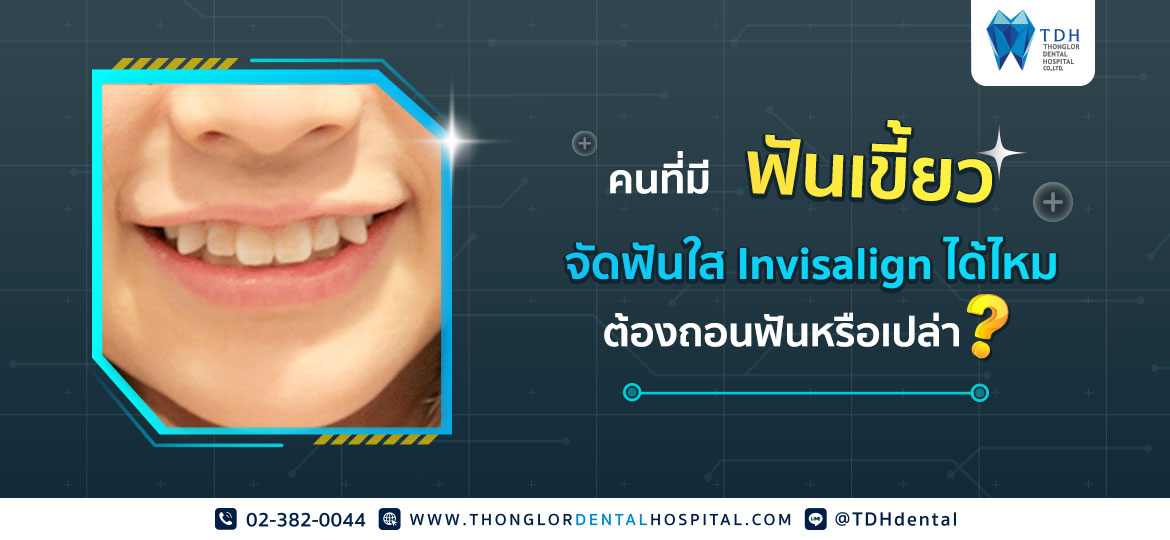
For people with prominent canine teeth, they can sometimes become a problem that makes us less confident about smiling. If you have heard of Invisalign, it may be an interesting option for you. Have you ever wondered whether people with prominent canines can have Invisalign clear aligners? Does the canine have to be extracted first? TDH Dental has an answer: extraction is not always necessary. We also have some extra knowledge about Invisalign clear aligners to share with everyone.
What do canine teeth look like?
Canine teeth are rather stout and thicker than other teeth, with a pointed tip. Generally, we all have 4 canines, located at the upper left and right corners and the lower left and right corners of the mouth. Canines also line up differently from person to person and vary in size. In some people the canines overlap other teeth so that they look crooked or crowded.
Oral problems caused by canine teeth
Although canines are strong teeth, problems can still occur. Because they are heavily used, they can easily turn yellow, and high canines can also develop.
What are high canines, and are they dangerous?
High canines are a form of crooked, crowded teeth in which the tooth erupts outside the line of the gum and is not in line with the neighbouring teeth. It is therefore classed as an abnormal tooth arrangement, which can have long-term effects. High canines make the tooth line uneven, which may reduce chewing efficiency and may cause an abnormal bite in the future. The abnormal position may also crowd the other teeth too much, creating a place where food debris, bacteria and tartar collect, leading to tooth decay and gum disease. Teeth that are crowded together may also wear the enamel down and wear more easily, and this may affect your personality and your confidence in your smile. Do not leave high canines until these problems occur, because you can deal with them with Invisalign clear aligners, which take only 6-12 months to give you a beautifully aligned smile, a better personality and confidence every time you smile.
Will a canine need to be extracted for Invisalign clear aligners?
In most cases, for people with crooked, crowded teeth, or large teeth with a small jaw, the dentist will plan treatment that combines tooth extraction with orthodontics, to make space to move the other teeth and arrange them more neatly. The same applies to Invisalign clear aligners: if the teeth are very crowded and crooked, extraction is also needed. You can read more about a patient case of clear aligners for crooked, crowded teeth.
If the canine is not far outside the line of the other teeth, the dentist will try to bring the canine down into line with the other teeth. Space may need to be made for the canine by extracting one premolar. However, you can consult a dentist at TDH Dental before starting clear aligners, or read other questions about clear aligners in the article 10 questions about clear aligners, which answers everything you may wonder about before starting treatment.
How long does it take for the canines to move into place?
With Invisalign clear aligners, there is a period in which the canine is moved backward. In cases where a premolar is extracted to reduce the protrusion of the front teeth, it takes about 6-12 months, depending on the condition of the patient’s teeth.
Many dental clinics now offer Invisalign clear aligners, but choosing which clinic to have them with is important and should not be overlooked. You should choose a specialist dentist for clear aligners for the best treatment results and to finish treatment quickly.
TDH Dental has a team of experienced dentists, backed by patient feedback and the Black Diamond Provider award for 5 years in a row. You can get advice from our orthodontic dentists at the TDH Dental branch nearest you.
