
 ไทย
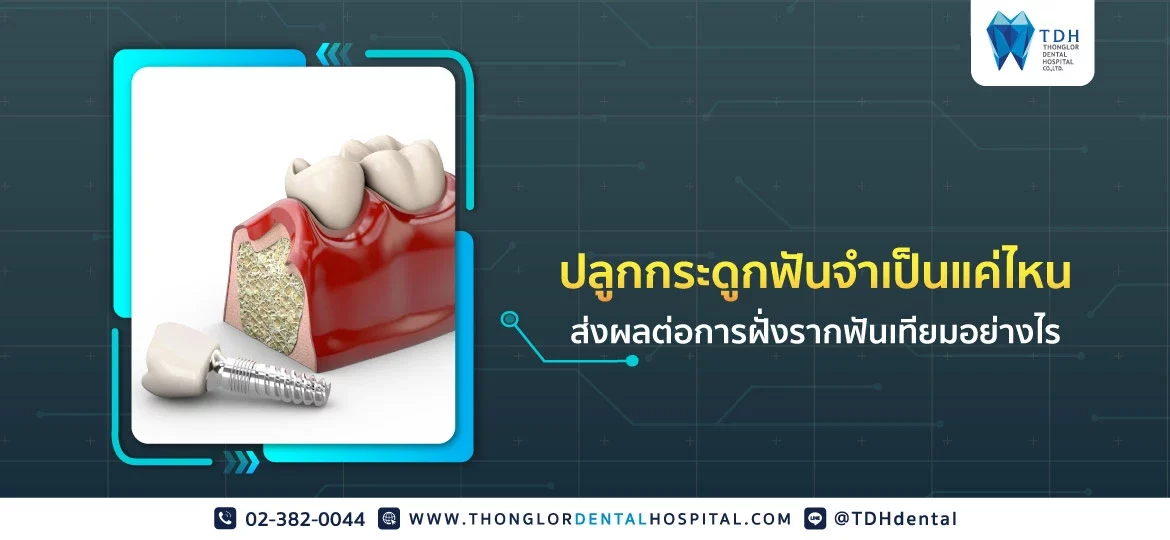
Dental implant surgery anchors a tooth to the jawbone with an artificial root, and it is considered one of the best ways to replace teeth. However, the condition and strength of the bone around the tooth socket differ from person to person, and bone can also break down with age, which can make it difficult to place an implant. A dental bone graft is therefore an important step that helps solve this problem. Let’s look at what a dental bone graft is and why it matters for dental implants.
What is a dental bone graft?
A dental bone graft adds bone or builds up the bone in the jaw so that it is thick and strong enough to support a dental implant. Our bone mass can break down with age, and other factors can make bone dissolve and become thinner, for example leaving a tooth extraction site untreated for a long time.
There are several dental bone grafting methods commonly used today, for example:
- Socket (ridge) bone grafting is usually done when the bone is narrow or a tooth was extracted long ago, so the width of the alveolar ridge is not enough to support an implant.
- Jawbone ridge grafting is a way of increasing the length of the jawbone, and it commonly uses donated bone.
- Block bone grafting increases the thickness or height of the dental bone, and it commonly uses the patient’s own bone.
- Sinus bone grafting is a graft in the upper back teeth area, next to the sinus cavity, to increase bone height and prevent the implant from slipping into the sinus. In some patients the sinus cavity is wide or hangs low, so the bone height in the upper back teeth area may not be enough to support an implant.
How many types of dental bone graft are there?
Dental bone grafts fall into 4 types:
- Bone from an organ donor (allografts) uses sterilized, non-living bone cells. The chance that the body will reject the graft or that the graft will fail to take is relatively low.
- The patient’s own bone (autografts) uses bone from another part of the body, such as jawbone near the wisdom teeth or chin, which is placed where the implant will go. The advantage is that the body does not reject it because it is the person’s own tissue. The bone can be harvested as a block or as powder.
- Bone from another species (xenografts), which means using sterilized animal bone. The advantage is that the bone dissolves slowly, but it is relatively expensive and must go through a complicated sterilization process.
- Synthetic bone (alloplast) is bone made from synthetic materials such as ceramic or calcium phosphate. The dentist decides which material to use based on their assessment.
Why is a bone graft needed before a dental implant?
A dental bone graft strengthens the jawbone so that it can support a dental implant, especially in people whose jawbone is thin for various reasons, such as:
- Bone breaking down with increasing age
- A tooth that was extracted or lost long ago and not replaced right away, so the bone dissolved
- Other factors, such as a bone abnormality, gum disease or an injury to the face
If the bone is too thin, the implant cannot anchor the tooth to the jawbone, and the tooth may shift or come loose. The dentist will assess the strength of your bone and determine whether you need a bone graft before the implant.
Where to get a dental bone graft
Both dental bone grafting and dental implant surgery are complex treatments that must be performed by dentists with specialized experience, at a dental clinic that meets standards. At Thonglor Dental Hospital, or TDH Dental, we have dentists specializing in dental implants who look after you throughout treatment, from consultation to follow-up after treatment. Our equipment and staff are also continually certified to the ISO 9001:2015 service quality standard, so you can be confident that your bone graft and implant treatment will be effective and address the problem you are facing.
Besides the choice of material and bone grafting method, choosing the implant is just as important, because a poor-quality implant can lead to long-term problems. Having read this far, many people may be wondering which dental implant brand to choose.
TDH Dental uses a variety of implant brands, including:
- Hiossen, an American brand that uses titanium, is affordably priced and integrates well with the jawbone.
- SIC, a Swiss implant with outstanding innovation that meets international standards.
- Straumann, a popular implant with a structure similar to real bone. It is strong and durable and has a high treatment success rate.
If you are interested in dental bone grafting and dental implants, you can contact any of our 6 TDH Dental branches for advice before treatment. If you are looking for a partner to look after your oral health, you can consult a dentist directly at any TDH Dental branch. Caring for your mouth and teeth can then become easy and hassle-free.
