

 ไทย
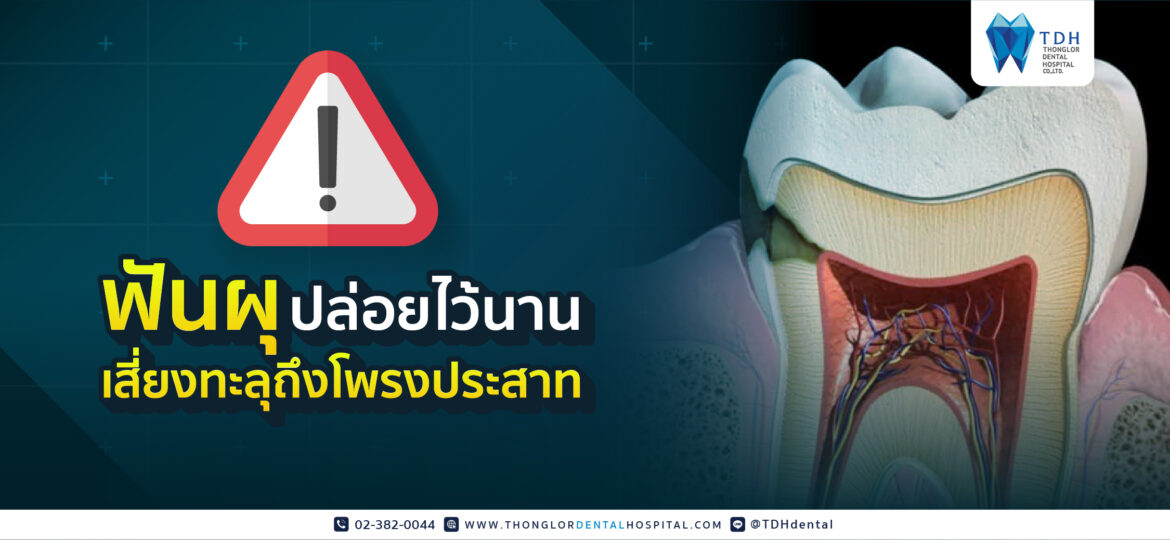
What is tooth decay?
Tooth decay is the destruction of tooth structure and enamel caused by bacteria in the mouth producing acid that erodes the tooth, creating holes or cavities. If left untreated, it can spread to the pulp (nerve chamber) of the tooth and cause severe pain or tooth loss.
Causes of tooth decay
- Eating too much sugar and starch – these foods feed the bacteria in the mouth, which produce acid that damages enamel.
- Poor oral hygiene – brushing irregularly or not thoroughly lets plaque build up.
- Low saliva – saliva helps wash away bacteria and acid. Too little saliva may increase the chance of tooth decay.
- Insufficient fluoride – fluoride helps prevent tooth decay. Without enough of it, enamel becomes weaker.
- Eating and drinking habits – frequent snacking or regularly drinking sugary drinks exposes the teeth to acid more often.
How long can tooth decay be left untreated?
If you find tooth decay, you should treat it as soon as possible, because decay can spread into the deeper layers of the tooth and cause infection in the pulp. This may lead to root canal treatment or even tooth extraction.
How can you tell if decay has reached the root?
If decay is deep enough to reach the pulp, you may have these symptoms:
- Severe toothache, especially at night
- Sensitivity when eating hot, cold or sweet foods
- Bad breath or a bitter taste in the mouth
- A large hole or black area visible on the tooth
- There may be pus or swelling in the gum around the decayed tooth
Can tooth decay be left alone?
You should not leave tooth decay untreated, because it can spread until the tooth has to be extracted, and it may cause other health problems, such as a bloodstream infection or sinusitis. If the decayed tooth is a baby tooth in a child, it may also affect the eruption of the permanent teeth.
Stages of tooth decay
- Early stage – white marks on the tooth surface, caused by minerals being drawn out of the enamel.
- Shallow decay stage – brown or black marks on the enamel, but no pain yet.
- Moderate decay stage – the decay breaks through into the dentin, and you may start to feel sensitivity.
- Deep decay stage – the decay reaches the pulp, causing severe pain.
- Infection stage – if untreated, pus may form, or the gums and jawbone may become inflamed.
Which tooth decay cannot be filled?
- Decay so deep that it reaches the root and pulp, which may require root canal treatment or extraction
- Teeth with too little remaining structure to support a filling material
- Teeth with a severe infection that affects the surrounding tissues
How to prevent tooth decay
- Brush thoroughly twice a day with fluoride toothpaste
- Use dental floss regularly to clean between the teeth
- Reduce sugar and sweet foods
- See a dentist for a check-up every 6 months
- Have dental sealants applied to prevent decay in children and people who are prone to tooth decay
How to treat tooth decay
- Fillings – using resin or amalgam to fill the decayed hole.
- Crowns – if the decay is large, a crown may be needed to protect the tooth structure.
- Root canal treatment – if the decay reaches the pulp, root canal treatment may be needed instead of extraction.
- Tooth extraction – if the decay is so severe that the tooth cannot be saved, it must be extracted.
Proper oral care reduces the risk of tooth decay and helps keep your teeth strong for longer. If you suspect tooth decay, see a dentist promptly for an examination and treatment.
