
 ไทย
What are inward-curving teeth?
Inward-curving teeth (teeth that tilt inward) is a condition where the front teeth or some teeth curve inward abnormally. It can have several causes, such as:
Causes of inward-curving teeth
- Genetics – the structure of the jawbone and the way the teeth are arranged can be inherited.
- Childhood habits – such as thumb sucking, using a pacifier for too long, or tongue thrusting.
- Pressure from surrounding teeth – for example, other teeth pushing against each other until a tooth tilts inward.
- Loss of some teeth – if there are gaps or teeth were extracted without being replaced with dentures, the remaining teeth may tilt or shift out of position.
- Jaw problems – such as abnormalities in the structure of the upper and lower jaws.
How can inward-curving teeth make you look older?
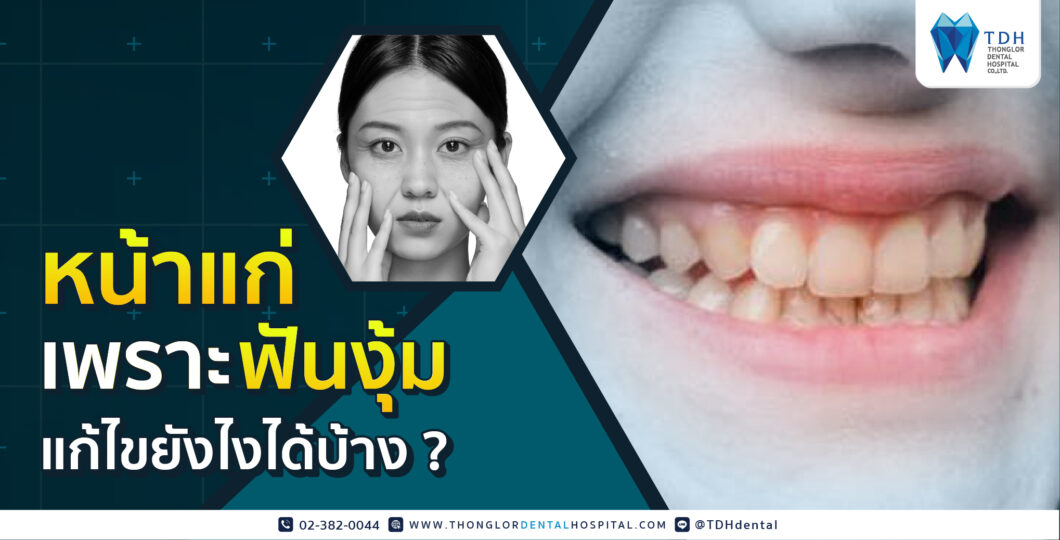
- A sunken facial structure – front teeth that curve inward make the upper lip look thinner and cause the middle of the face to sink in, making the face look tired and older than your age.
- Drooping corners of the mouth – front teeth that tilt inward can make the corners of the mouth droop, resembling someone with a sad or older-looking face.
- A prominent-looking chin – when the front teeth sit further back, the chin may look more prominent, making the face look unbalanced.
- Wrinkles around the mouth – the structure of the teeth affects the skin around the mouth. Teeth that curve inward mean the cheeks and lips are not well supported, so wrinkles can appear sooner.
Effects of inward-curving teeth
- Abnormal biting and chewing
- Affects speech and pronunciation
- Increases the chance of tooth decay and gum disease because the teeth are hard to clean
- May cause jaw pain or TMJ (temporomandibular joint disorder)
- Inward-curving teeth can make you look older than your age, which affects confidence
Ways to correct it
- Orthodontic treatment – you can use metal braces, Damon braces or Invisalign to gradually move the inward-curving teeth out to a normal angle.
- Veneers – if the teeth curve inward only slightly, they can be corrected right away with veneers to reshape the teeth so they look straighter. However, this can only be done once the dentist has checked that the patient’s bite is normal and there is no problem with the jaw joint. Read more about veneers
*If the dentist finds that the patient has a jaw joint problem and a poor bite, the dentist will recommend having orthodontic treatment first and then getting veneers afterward.
