

 ไทย
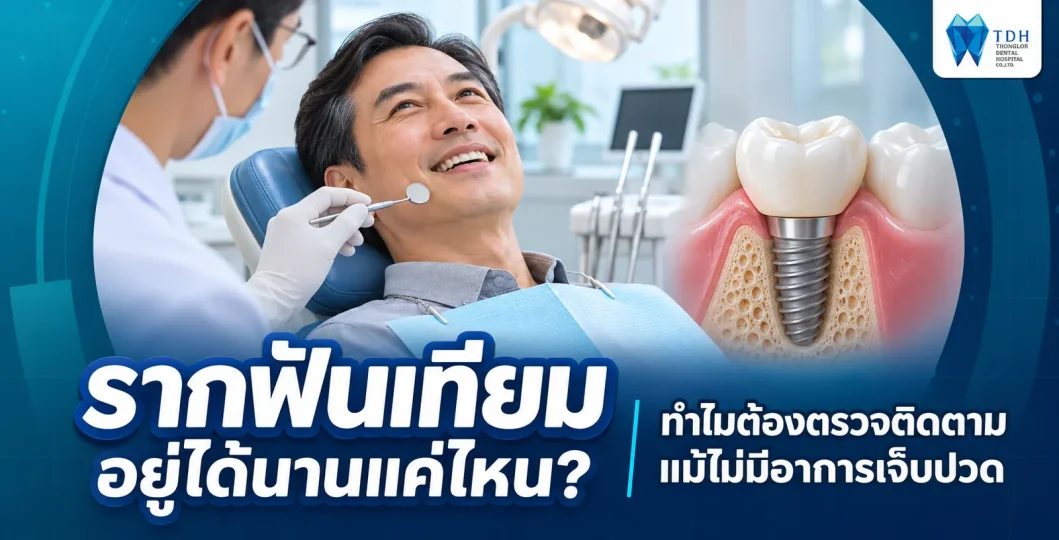
Many people assume that once a dental implant is finished, it will last for years without any need for further check-ups, because implants cannot get cavities like natural teeth. In reality, the gums and bone around an implant can still become inflamed, even when there is no pain. Regular care and follow-up are therefore important for the long-term life of your implant.
How long do dental implants last?
In some patients, implants can last for several decades, depending on oral health, the amount and quality of the supporting bone, how well the area is kept clean, and follow-up after treatment.
A systematic review published in 2026 found that implants have a survival rate of about 95% over long-term follow-up of 10–25 years. However, this figure is pooled from many studies. It does not mean every implant will last equally long or be free of complications.
Although the implant material does not decay like natural teeth, the crown on top can wear or be damaged, and the tissue around the implant still needs ongoing care.
Two types of inflammation around dental implants (peri-implant diseases)
Problems that can develop after implant treatment fall into two main conditions:
1. Peri-implant mucositis — inflammation of the soft tissue around the implant
This is inflammation of the soft tissue around the implant, without additional loss of supporting bone caused by the inflammation.
Signs may include:
-
Red or swollen gums around the implant
-
Bleeding when brushing or when the gums are examined
-
Irritation in the tissue around the implant
If it is found early and managed properly, this condition can return to a healthy state.
2. Peri-implantitis — inflammation around the implant with bone loss
This is inflammation that affects both the tissue around the implant and the supporting bone, causing further bone loss that may affect the long-term stability of the implant.
If left untreated, the disease can progress and increase the risk of losing the implant.
Why do you still need check-ups when there is no pain?
Some problems around implants can begin without obvious pain, so patients may not realize that something is wrong.
Follow-up visits let the dentist assess the health of the tissue around your implant, for example by:
-
Checking for plaque and tartar build-up
-
Assessing inflammation and bleeding of the gums
-
Measuring the depth of the gum pocket around the implant
-
Checking the stability of the implant and the condition of the crown
-
Assessing the bone level around the implant with X-rays when indicated
People who smoke, have poorly controlled diabetes or have a history of periodontal disease should pay particular attention to follow-up according to their own level of risk.
How often should implants be checked?
In general, a dentist may schedule follow-up every 3–6 months, especially for patients at higher risk of peri-implant disease or who have been treated for inflammation before.
However, the right frequency depends on gum health, treatment history and each person’s risk factors. Patients whose tissue around the implant is stable may be given different appointment intervals according to their dentist’s assessment.
5 ways to care for your dental implants for the long term
Looking after an implant comes down to simple daily habits:
-
Brush at least twice a day to remove plaque from your teeth and implants.
-
Clean between your teeth every day with floss or suitable interdental brushes.
-
Avoid smoking, which is a risk factor for problems around implants.
-
Manage any health conditions, especially blood sugar control if you have diabetes.
-
Keep your follow-up appointments even when you have no pain, so that problems can be found at an early stage.
Long-term implant care at TDH Dental
The success of an implant does not end on the day the crown is placed. It also includes continuing care of the gums and bone around the implant so that it can function well over the long term.
At TDH Dental, we look after your oral health from assessment and implant planning through to follow-up after treatment, with our experienced dental team.
An implant that works well in the long term starts with continuous care, even on the days when nothing hurts.
