
 ไทย
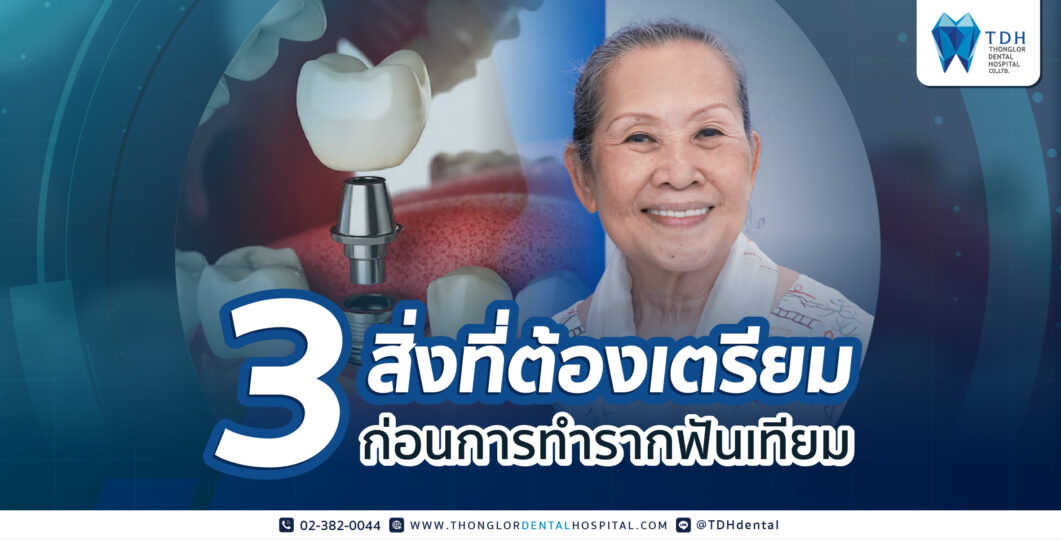
A dental implant is a very popular way to replace missing teeth today because it feels close to a natural tooth, is strong and lasts a long time. However, before deciding to get a dental implant, there are some preparations you should make to improve safety and the chances of successful treatment.
This article covers 3 important things to prepare before getting a dental implant
1. Check for Underlying Health Conditions Before Your Implant
Your overall health affects the success of implant placement, especially conditions that affect wound healing, such as:
-
Diabetes
-
High blood pressure
-
Heart disease
-
Osteoporosis
These conditions may affect the healing process and how well the implant bonds to the jawbone. If you have an underlying condition, always tell your dentist, and keep the condition well controlled before treatment.
2. Tell Your Dentist About the Medications You Take Regularly
Some medications can affect surgery and wound healing after a dental implant, such as:
-
Blood thinners
-
Cholesterol-lowering drugs
-
Blood pressure medication
-
Osteoporosis medication
Some medications may need to be adjusted temporarily before the procedure, so tell your dentist about everything you take so that treatment can be planned safely.
3. Plan Your Budget and Research Thoroughly
Dental implants are now more affordable, and generally start at tens of thousands of baht, but before deciding you should consider the following important factors.
3.1 Implant Brand
The implant brand affects standards, material quality and long-term warranty.
At TDH Dental, the quality of materials is a priority for safety and durability, and our dental team has chosen to use quality implant brands:
- Hiossen from the USA, starting at 59,000 baht per tooth
- Straumann from Switzerland, starting at 75,000 baht per tooth
The choice depends on what suits each person’s condition to give the best value.
3.2 Dentist’s Experience
A dentist experienced in dental implants can plan treatment accurately and reduce risks. The implant dentists at TDH Dental are highly experienced and are also dental instructors.
3.3 A Well-Equipped Clinic or Hospital
Choose a facility with modern equipment such as X-ray or CBCT, which helps analyse the bone and position the implant accurately.

Does Getting a Dental Implant Hurt?
Many people worry that a dental implant will be very painful, but in reality treatment uses local anaesthesia, so patients feel almost no pain, and swelling afterwards is usually only slight. Most people can return to normal daily life as usual.
Consult About Dental Implants
If you are planning to get a dental implant but are not sure where to start, you can consult the implant dental team at all TDH Dental branches to assess your oral health and plan treatment that suits you.

Dr. Skun Chinudomwong
Doctor's Profile
Dr. Jetsada Lapsukkitkul
Doctor's Profile
Dr. Kunanon Phongsakornwanich
Doctor's ProfileRegister to Consult an Implant Dentist and Instructor
and receive a special dental implant promotion